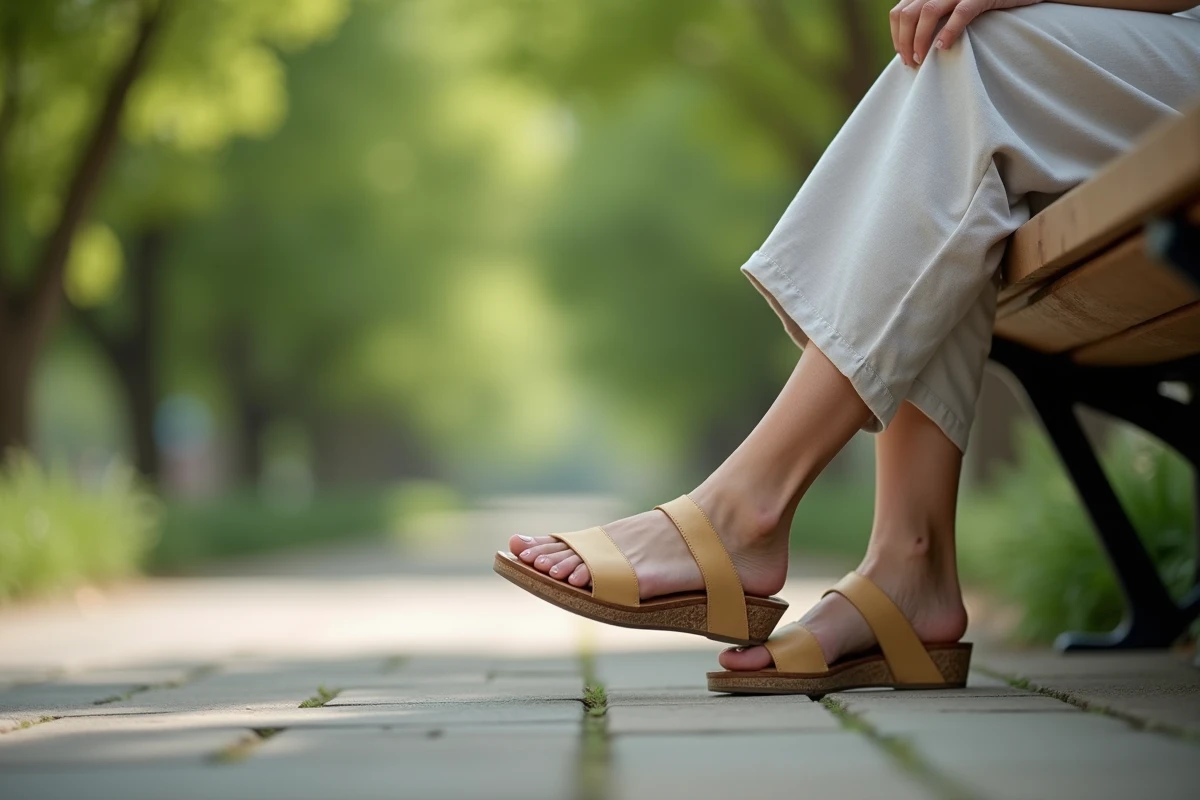
Dr Scholl occupies a unique place in the comfort shoe market. Founded in the early 20th century by a qualified podiatrist, the brand relies on a medical heritage that inspires trust. Its models, including sandals, clogs, and ballet flats equipped with anatomical insoles, appeal to a wide audience seeking daily relief.
Does the promise of comfort suffice to guarantee foot health in the long term? Recent field reports provide nuanced answers.
Metatarsalgia and comfort clogs: what podiatry clinics are reporting
Podiatry clinics have reported since 2023 an increase in consultations for forefoot pain among patients wearing so-called “comfort” clogs, including Scholl models. The most frequently observed conditions are metatarsalgia and interdigital corns.
The mechanism at play is quite simple to understand. A strap that is too loose allows the foot to slide forward in the shoe. The toes tense to compensate, the forefoot absorbs excessive load, and pain gradually sets in.
Another aggravating factor relates to the molded arch in the insole. When it is too pronounced compared to the actual foot morphology, it creates an inappropriate pressure zone. The wearer initially feels pleasant support but develops irritations after several hours of walking.
This phenomenon raises a fundamental question: the comfort felt during fitting does not predict tolerance over an entire day. A detailed article published on the Mam’Zell Plume website precisely explores this distinction between immediate sensation and real impact on foot health.
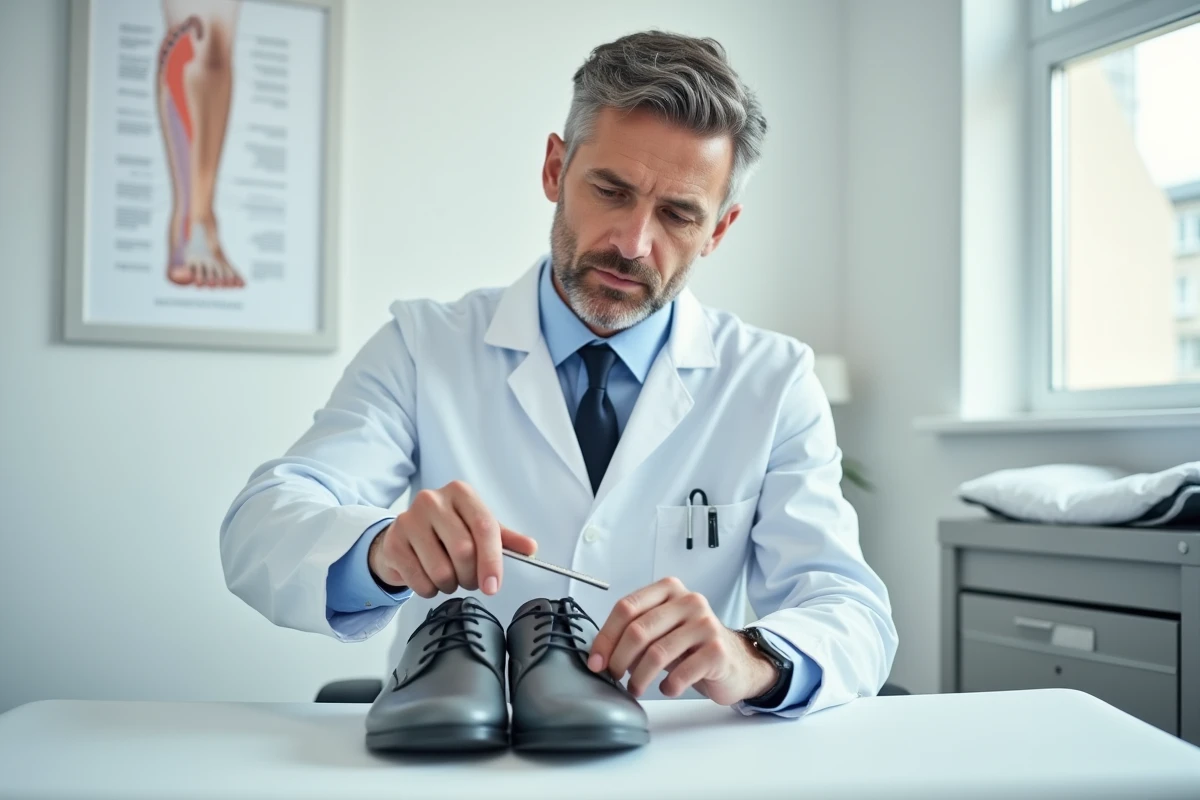
Dr Scholl anatomical insole: real support or false sense of security
The technologies integrated into Scholl shoes, particularly GelActiv insoles and the Bioprint system, aim to distribute pressure under the foot and absorb shocks. In principle, these devices meet a legitimate need for daily care.
The problem identified by several podiatrists lies in the false sense of security provided by the “comfort” label. Patients believe they are wearing a quasi-medical product and overlook two determining parameters:
- The precise fit of the shoe to their foot, both in length and width, which conditions the correct distribution of pressure on the arch
- The condition of the inside of the shoe after several months of use, where rough spots, worn seams, or strap screws can create dangerous friction points for sensitive feet
- The necessity to alternate with closed and fitted shoes to limit microtraumas, especially for people suffering from diabetic feet or chronic wounds
A gel insole absorbs shocks, but it does not correct a misalignment of the foot. A mass-market comfort product does not replace a custom orthopedic shoe, designed from a mold and a complete podiatric assessment.
Risk of ankle instability with open Scholl models
Sandals and clogs constitute a significant part of the Dr Scholl catalog. These open models, by nature, provide less lateral support than a closed shoe. Several podiatrists interviewed in the specialized press point to an increased risk of ankle instability with this type of shoe worn daily.
The overload of the forefoot, combined with the absence of a rear counter, puts more strain on the ankle ligaments. In individuals already prone to chronic ankle instability or hallux valgus, prolonged wear of these models can worsen the situation.
Wearing a Scholl clog for a few hours for a light outing generally does not pose a problem. Making it the primary shoe for daily walking exposes one to metatarsal pain that sets in insidiously.
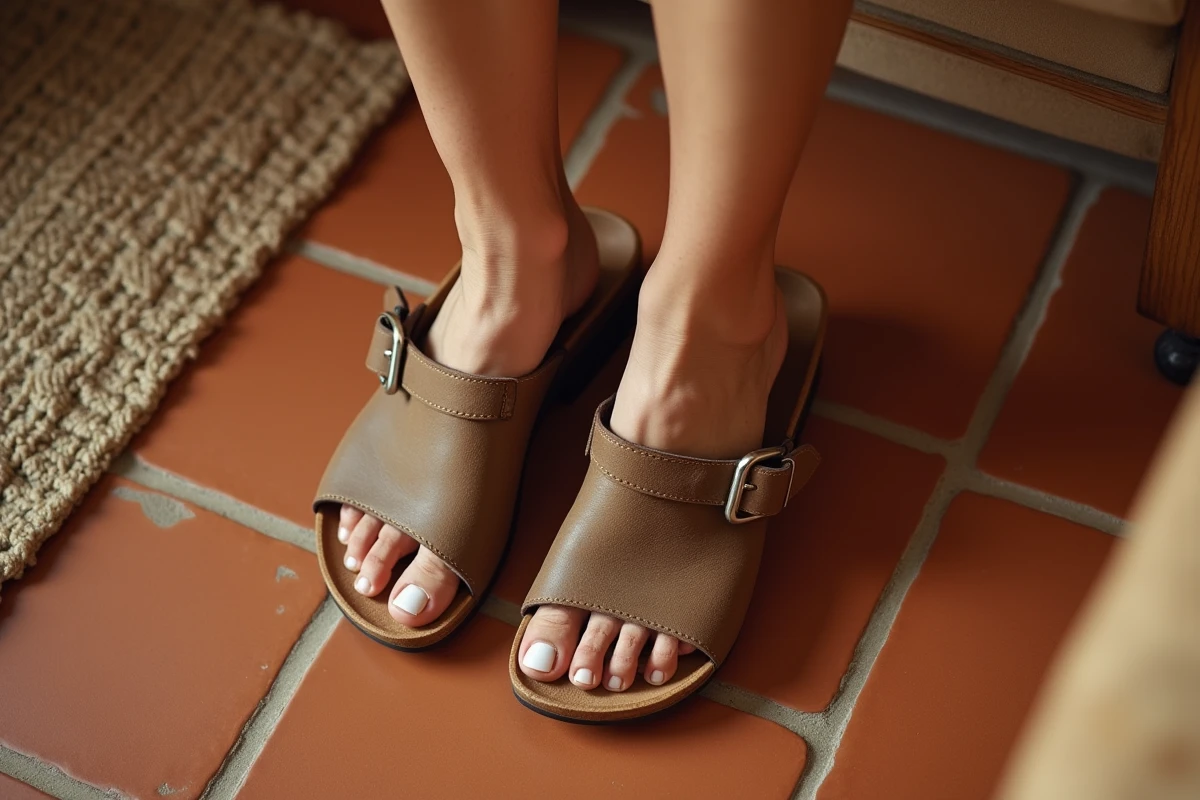
When comfort becomes a biomechanical trap
The soft gel under the heel and generous cushioning give the foot the impression of exerting no effort. The intrinsic muscles of the foot, less engaged, may lose tone over the long term. This muscular relaxation promotes the collapse of the arch, precisely the problem that the anatomical insole claims to prevent.
An overly assisted foot by its insole gradually loses its self-supporting capacity. This paradox is not unique to Scholl; it concerns all highly cushioned shoes worn without alternation.
Dr Scholl shoes for daily use: criteria for reasonable use
The available data do not allow for classifying Dr Scholl shoes as dangerous or therapeutic. Their impact largely depends on how each wearer uses them. Some concrete guidelines emerge from podiatrist feedback:
- Ensure that the strap firmly holds the foot without compressing it, to avoid sliding forward and metatarsal overload
- Regularly inspect the inside of the shoe for rough spots or damaged seams that could injure a fragile foot
- Systematically alternate with closed shoes offering rigid support, especially for long journeys or prolonged urban walking
- Consult a podiatrist before replacing a prescribed orthopedic shoe with a mass-market Scholl model, even one equipped with gel or an anatomical insole
Alternation remains the most commonly shared recommendation among foot professionals. No shoe, no matter how well designed, is suitable for all situations or all feet. Dr Scholl models serve a role of occasional relief and supplementary comfort, provided they are not relied upon for the entirety of daily walking load.