
The French driving license is entering a phase of accelerated transformation. Between the vote of the European Parliament in October 2025, the dematerialization via France Identité, and the lowering of the driving age already in effect, several timelines overlap. Distinguishing what is already applicable, what will come into effect soon, and what still pertains to European transposition allows for a better understanding of the actual scope of changes for drivers in France.
Actual timeline of the driving license reform: what has been voted and what remains to be transposed
The most common confusion is to assume that the vote of the European Parliament on October 21, 2025, makes the new rules immediately applicable. This is not the case. The European vote opens a transposition procedure, not an entry into force.
Specifically, the directive still needs to be published in the Official Journal of the European Union, and then each member state has a deadline to adapt its national law. France will therefore need to legislate or regulate before certain measures, such as the end of the lifetime license or periodic medical examinations, apply on its territory.
| Measure | Current Status | Estimated Entry into Force |
|---|---|---|
| License at 17 (category B) | In effect since January 1, 2024 | Already applicable |
| Dematerialization via France Identité | Gradually deployed | Usable now |
| End of the lifetime license (limited validity) | Voted in the European Parliament | After national transposition (horizon 2028) |
| Harmonized cross-border sanctions | Voted in the European Parliament | After national transposition |
| Medical examinations for renewal | Voted in the European Parliament | After national transposition |
This table highlights a point that several sources relayed in the news on Ma Future Voiture detail: only two measures are already operational in France, the license from 17 years and the digital license. The others remain contingent on transposition.

End of the lifetime license and medical examination: what the European directive provides
The measure that generates the most reactions concerns the validity period of the license. Until now, the French B license remained valid for life (except for the plastic card format that must be renewed administratively every fifteen years). The directive voted in October 2025 plans to condition renewal on health criteria.
Self-assessments or medical examinations would be required at regular intervals, particularly for senior drivers. However, the specifics of age thresholds and the frequency of checks fall under transposition by each state.
In France, this issue is politically sensitive. No national legislative timeline has been announced at this stage. The most frequently cited deadline for the entire directive is around 2028, which leaves room for negotiation on the modalities.
Cross-border sanctions: a concrete change for French drivers
The other less commented aspect concerns the cross-border recognition of license withdrawals and suspensions. Today, a French driver penalized in another EU country does not automatically see the sanction transmitted to their country of origin.
The directive provides that decisions regarding withdrawal, suspension, or restriction of licenses are now to be communicated to the country that issued the license. For a French driver committing a serious offense in Spain or Italy, the sanction could therefore directly affect their points balance or the validity of their license in France.
Digital license via France Identité: limits and recognition abroad
The dematerialization of the driving license via the France Identité app is often presented as the flagship measure of 2026. It allows drivers to present their driving title from a smartphone during a roadside check, without having the physical format on them.
However, this advancement has limits that need to be identified:
- The digital license does not replace the physical title in all contexts, particularly for vehicle rental abroad or in non-EU countries that do not recognize the dematerialized format.
- The technical compatibility between the control systems of different member states is not yet fully guaranteed, which can pose problems during cross-border travel.
- In case of battery failure or inaccessible phone, the absence of the plastic format can complicate the situation during a check, even if no fine is theoretically provided for this sole reason in France.
License B at 17 and probationary period: assessment after two years of application
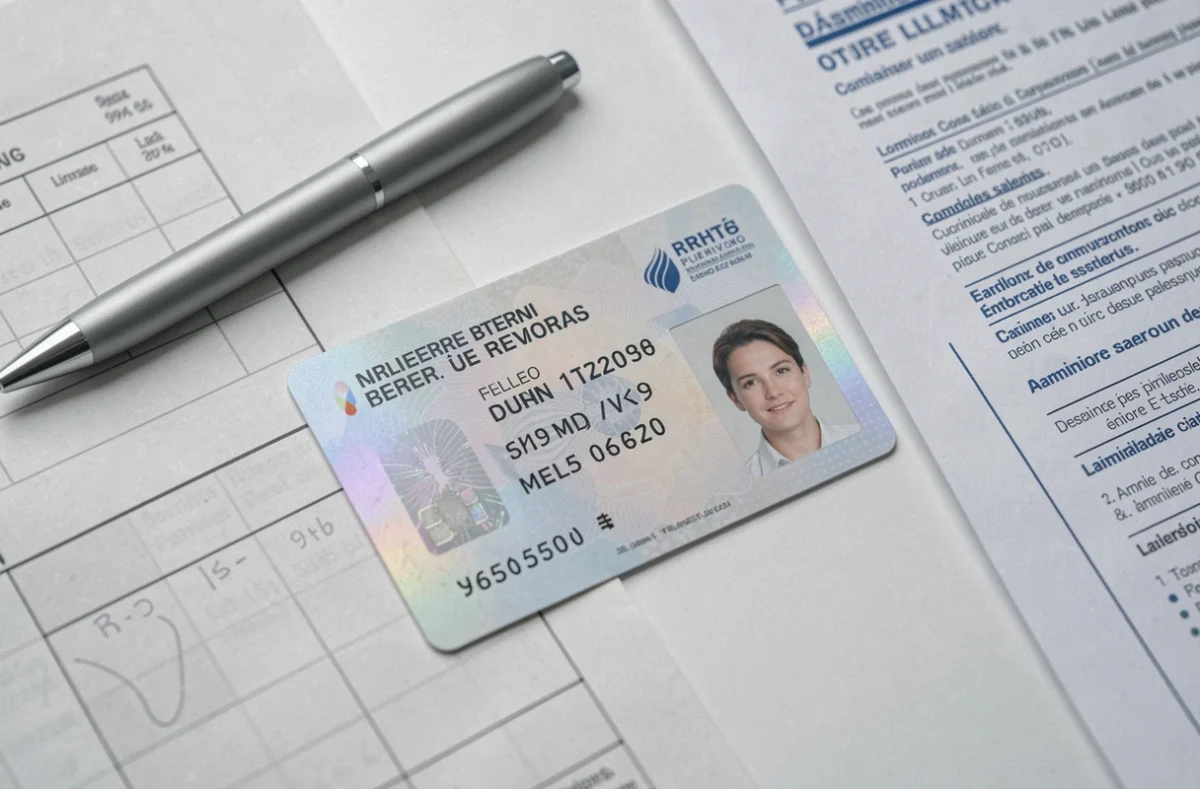
Since January 1, 2024, candidates can take and obtain the B license as early as 17 years old, without waiting for adulthood. Accompanied driving remains possible from 15 years old, and the practical exam is accessible at 17.
The European directive adds an additional framework by establishing a probationary period of at least two years for all beginner drivers. This period was already applied in France, but the directive harmonizes it at the EU level. It also provides stricter rules for young drivers in cases of driving under the influence of alcohol, absence of child seats, or failure to wear a seatbelt.
Civil liability of parents and young drivers at 17
One point remains structuring for families: a minor driver holding a B license engages the civil liability of their parents in the event of an accident. Auto insurance must specifically cover the young driver, often with a surcharge. The reform does not change this legal framework, which falls under French civil law and not the European directive.
The measures that are truly applicable in 2026 are therefore limited to the digital license and the license at 17, already in place. The end of the lifetime license, medical examinations, and the harmonization of sanctions remain suspended pending French transposition, for which neither the timeline nor the modalities have yet been set. A gap that deserves to be monitored in the coming months.