On a hilly course, a slightly wayward drive into thick rough can cost several minutes of searching and a penalty stroke. In recent years, golf balls fitted with a Bluetooth chip have promised to solve this problem by guiding players to their ball through a smartphone app.
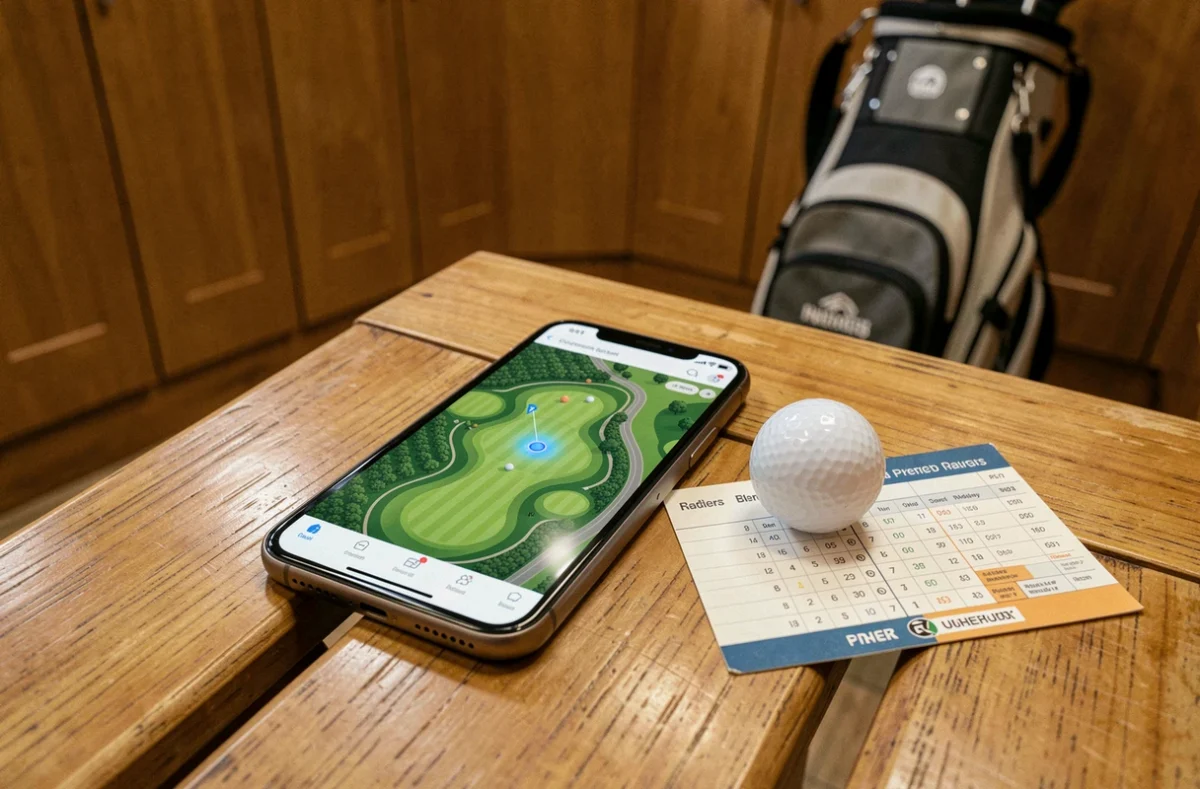
The technology doesn’t rely on a GPS receiver built into the ball: the phone’s GPS pinpoints the general area, then the Bluetooth signal guides the search over the final few metres. This distinction makes all the difference to how reliably the ball can be found, depending on the terrain.
Bluetooth vs. GPS: what the ball actually detects
The word “GPS” often appears in the marketing for these products, but it can be misleading. The Chiping model, for example, has a Bluetooth chip, not a satellite receiver. The app uses the phone’s GPS to guide the player to the right area, then Bluetooth takes over to narrow down the ball’s location.
In practice, the ball can be detected from around 30 metres away in open conditions. That range is more than enough when it has rolled into visible rough or a closely mown semi-rough. Take out your phone, follow the signal and find the ball in seconds instead of spending three minutes tramping around.
When investing in a golf ball with location tracking, bear in mind that the advertised range applies to flat, open terrain. As soon as uneven ground, dense vegetation or a physical obstacle gets in the way, the signal weakens.
Rough, woodland or water hazard: accuracy varies with the terrain
This is the point most product presentations gloss over. Not all terrain is equally suitable for Bluetooth detection, and a trackable golf ball is no substitute for a well-placed shot.
Rough and adjacent fairway
This is the ideal scenario. The ball is a few metres from the fairway, hidden in long grass but with no major obstacle between it and the player. The Bluetooth signal passes through the grass without difficulty. You save time, avoid the stress and get back to playing without taking a penalty stroke.
Woodland and dense vegetation
Uneven ground and tree trunks weaken the signal. The detection range can drop well below the advertised 30 metres. If the ball has gone through a row of thick trees, the phone may not pick up the signal until you’re almost on top of it. In dense woodland, the ball is still useful, but you’ll need to search by sight as well.
Water hazards
The Chiping specifications make this clear: water significantly reduces the range of the Bluetooth signal, and the ball does not float. If it lands in a pond or deep stream, locating it becomes almost impossible. The technology can’t prevent balls from being lost in water, which accounts for a significant proportion of lost balls on many courses.
- Open rough: reliable detection, maximum range of around 30 metres, quick recovery
- Woodland: range reduced by vegetation and uneven ground; signal usable only at close range
- Water hazard: signal severely weakened or nonexistent; the ball sinks and is unlikely to be recovered
Trackable golf balls and competition: a rule to be aware of
Golfers considering using this technology in a tournament should check one important detail. The Chiping model, for example, was designed with certain technical requirements of the Rules of Golf in mind. The ball has not been submitted for an official conformity ruling by the USGA or the R&A.
In practical terms, this means it is not listed as a conforming ball for sanctioned competitions. That’s not an issue for a friendly round or practice. But for a registered player taking part in official events, this ball remains a practice tool, not a competition ball.
This technical limitation explains why professional tours use external tracking systems. The PGA Tour’s ShotLink, for example, combines GPS with laser equipment installed around the course to measure every shot. It’s a system set up for an entire tournament and has nothing to do with a chip built into the ball itself.
Which golfers benefit most from a connected ball?
A trackable golf ball isn’t equally useful for every skill level or type of course.
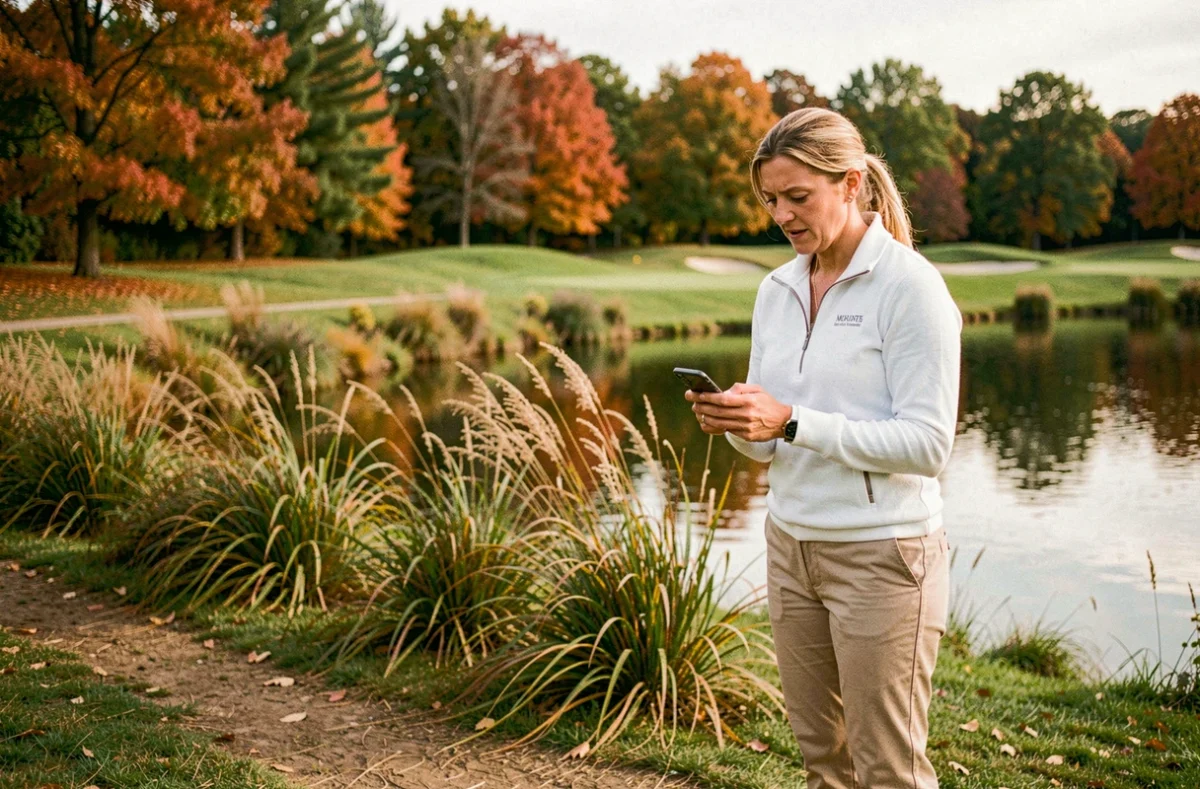
Beginners and intermediate players who regularly lose balls in the rough will save a meaningful amount of time. Shorter search times speed up play for the whole group. On a course where tee times are spaced eight to ten minutes apart, every minute saved counts.
Experienced players who hit straight most of the time will get less day-to-day benefit. The technology is most useful on challenging holes with tight doglegs or blind areas where even a good shot can disappear from view.
- High-handicap players on wooded courses: maximum time savings, with the investment quickly paying for itself in balls not lost
- Regular players on open links courses: limited usefulness, as the ball can usually be found without help
- Practice and the driving range: lets you test risky shots without worrying about losing the ball, encouraging experimentation
A detection range of around 30 metres in open terrain covers most search situations. When the ball disappears into a water hazard or very dense woodland, the technology reaches its physical limits. Bluetooth can locate a ball, but it can’t work miracles underwater. On a course where rough is the main hazard, however, this ball can genuinely change the way you play by removing the frustration of searching.