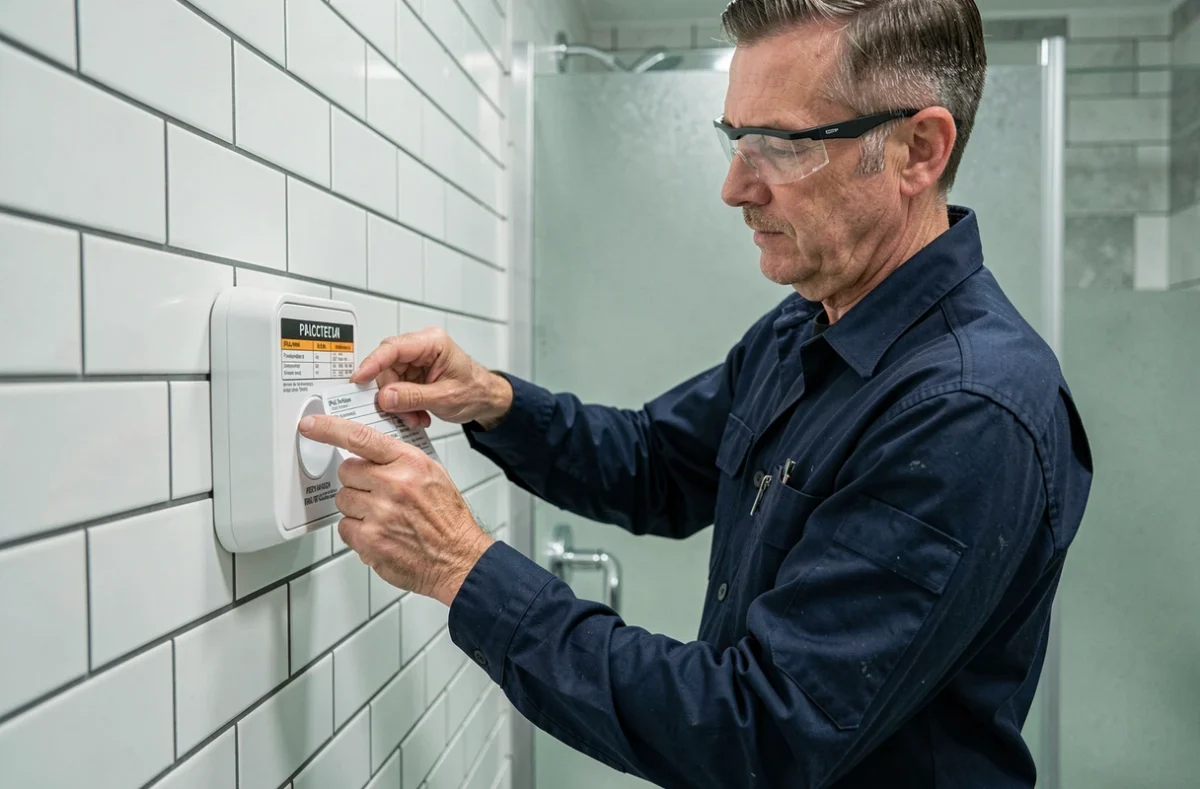
The IP44 rating and Class II designation refer to two separate types of protection against different risks. IP44 protects against solid objects and water splashes, while Class II protects against electric shock through double insulation. Equipment can be IP44 without being Class II, or Class II without being IP44. Confusing these two markings can lead to poor choices, particularly in damp rooms or outdoors.
IP44 rating: what the two digits actually measure
The IP code follows the European standard EN 60529. Each of the two digits after the letters “IP” refers to a separate test carried out in a laboratory.
The first digit (4 in IP44) indicates protection against the ingress of solid objects with a diameter of 1 mm or more. Wires, screws and small insects cannot reach live parts.
The second digit (also 4) indicates resistance to water splashes from any direction. An IP44 device can withstand splashes, but it is neither dust-tight nor resistant to a powerful water jet. For a directed water jet, a rating of at least IP55 is required; for immersion, IP67 or higher.
A guide explaining Class II protection and its symbol makes it easy to identify the double square printed on the relevant devices.
Practical limitations of IP44 outdoors
Under an awning or on a covered terrace, an IP44 light fitting can withstand rain splashes carried by the wind. By contrast, a spotlight recessed into the ground along a garden path and exposed to standing water requires a higher rating.
The choice therefore depends on the equipment’s actual exposure, not just the room or area indicated on a plan.
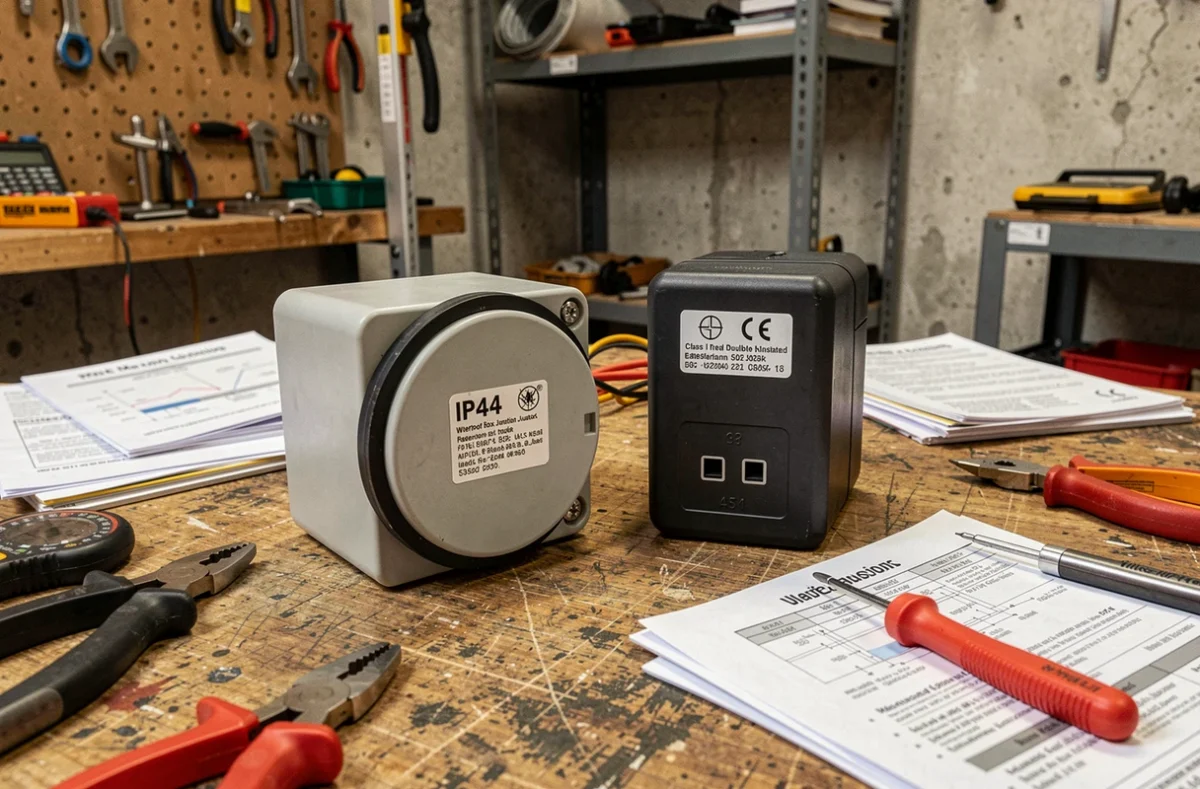
Class II and double insulation: protection against electric shock
Electrical protection class addresses a completely different risk: electric shock in the event of an internal fault in the device. Class II relies on double or reinforced insulation. No earth conductor is required, because the device’s design prevents dangerous voltage from reaching accessible parts.
The Class II symbol is a double square (one square inside another), printed on the rating plate. In practice, this means the power cable has no earth wire (green and yellow).
Class II in bathrooms: a common source of confusion
In a bathroom, regulations require a minimum IP rating depending on the zone (zones 0, 1 and 2). A Class II light fitting installed in zone 2 protects against electric shock, but it must also have an IP rating suitable for the water splashes in that zone. Class II does not protect against water.
Conversely, a Class I IP44 device (with an earth connection) requires a circuit with a properly connected protective conductor. One does not replace the other: the two markings address separate requirements.
- IP44 answers the question: “Can the device withstand solid objects larger than 1 mm and water splashes?”
- Class II answers the question: “Does the device protect against electric shock without an earth connection?”
- Combining the two (a Class II, IP44 device) covers both risks, which is common for bathroom or covered-terrace light fittings
IP rating after installation: checking that protection is maintained
The IP rating is measured on a new device assembled in accordance with the manufacturer’s instructions. In real-world conditions, several situations can reduce this level of protection without the user noticing.
Common causes of a loss of IP protection
- An enclosure gasket incorrectly repositioned after the cables are fed through: water protection drops immediately, even if the enclosure is marked IP44
- A cable gland that is cross-threaded or missing: the cable entry becomes a direct point of water ingress
- An outdoor socket cover cracked by frost or UV exposure: the second IP digit no longer reflects the actual level of protection
- A light fitting designed for a sheltered wall but installed in direct exposure to rain: the conditions exceed the limits of its IP rating
The IP rating is valid only if the device is properly closed and installed under the specified conditions. Any modification, even a minor one (adding a hole, changing the cable gland or replacing a gasket with a non-compliant model), can invalidate the stated protection.
What this means when choosing equipment
When buying equipment, it makes sense to choose an IP rating slightly higher than the strict minimum if installation conditions are unpredictable (strong winds, condensation or cleaning with a water jet). An IP55 device where IP44 would theoretically suffice provides an extra safety margin against installation inaccuracies.
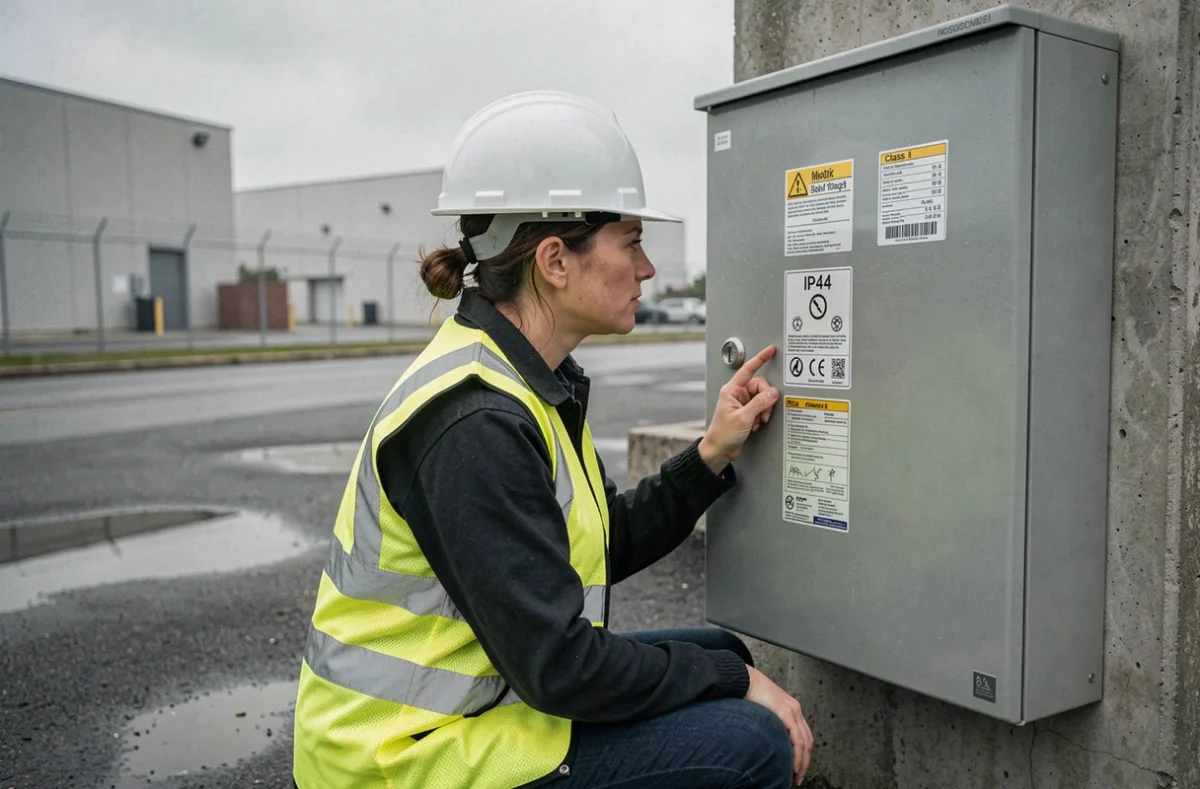
Combining IP rating and protection class: how to check
Before buying electrical equipment, two separate checks are needed.
First, identify the physical conditions where the equipment will be installed: exposure to water (splashes, jets or immersion), dust and vibration. This determines the minimum IP rating.
Second, check the available electrical circuit. If the circuit has no earth conductor, a Class II device with double insulation is required. If an earth conductor is present and connected to a residual-current circuit breaker, a Class I device is also suitable.
The manufacturer’s technical specifications should state both details. A device that displays an IP rating without specifying its protection class (or vice versa) is a warning sign about the quality of the documentation provided. Checking both markings before buying helps avoid discovering an incompatibility during installation, when the equipment can no longer be returned.