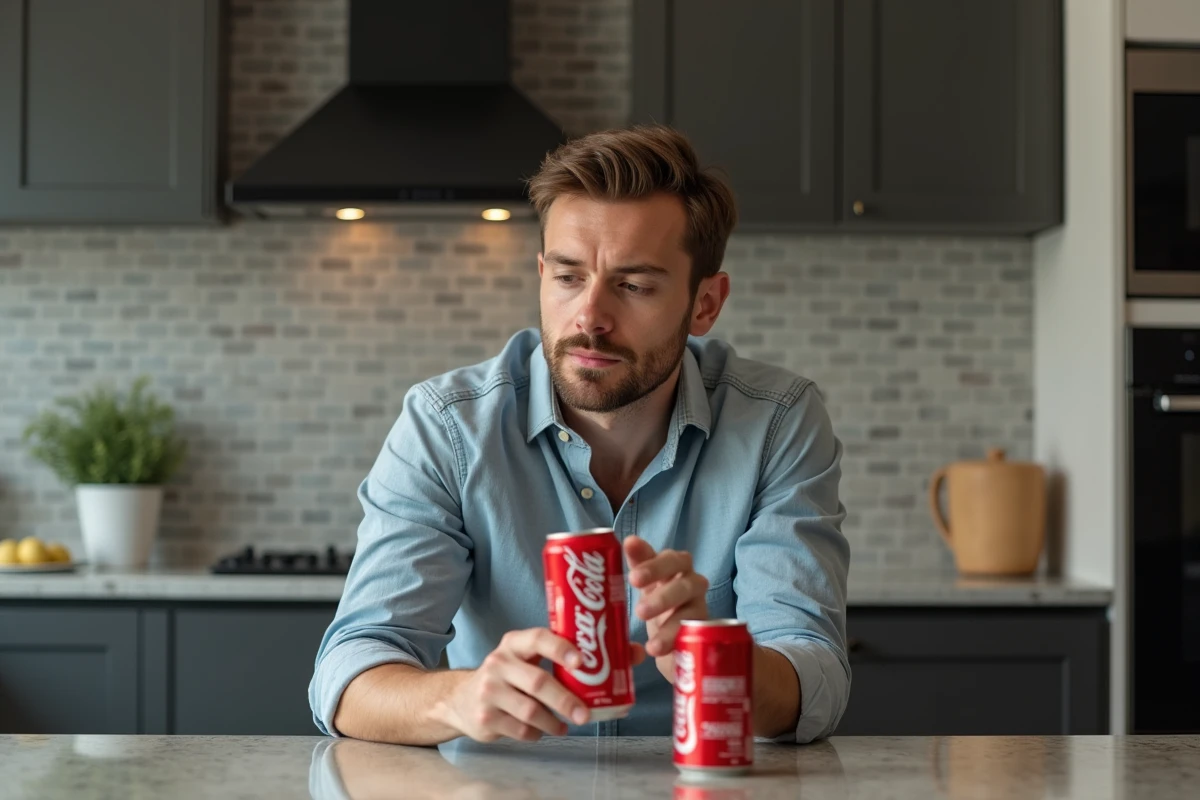
Since 2005, sugar-free soda formulas have continuously been reshaped, influenced by the pressure from health authorities and the growing expectations of the public. Sweeteners like aspartame and acesulfame K, omnipresent in these beverages, are now among the most scrutinized additives in the world.
Coca-Cola Zero proudly claims zero sugar and zero calories, but the debate about its true impact on weight management remains lively. Several studies highlight sometimes notable discrepancies between what is expected from a sugar-free drink and the reactions observed in some regular consumers.
Coca-Cola Zero: what ingredients and how do they differ from the classic?
Examining the composition of Coca-Cola Zero raises questions about the thin line between fidelity to tradition and the race for innovation in the soda universe. The heart of the Coca-Cola Zero recipe lies in its light formula: no sugar, but a blend of sweeteners, aspartame and acesulfame K, which mimic the sweetness of sugar without a single calorie.
In detail, the drink starts with a base of carbonated water for a sparkling mouthfeel. Phosphoric acid adds a characteristic tangy note, and sodium citrate adjusts the overall acidity. A caramel color E150d provides the iconic dark hue of cola. Finally, natural flavors, the precise recipe of which is closely guarded, give the product that taste that instantly recalls the original brand.
Comparing it with classic Coca-Cola reveals a clear break: the original version contains about 10.6 grams of sugar per 100 ml, while the Zero shows none, nor any fat or calories. This contrast continues to fuel the debate on weight gain and the place of light sodas in a modern diet.
To delve deeper into the subject, the composition and ingredients of Coca-Cola Zero provides precise insights to distinguish the product’s specifics, its additives, and what separates it from the historical formula that built the brand’s reputation.
Does Coca-Cola Zero really make you gain weight? What studies and experts say
It is impossible to mention Coca-Cola Zero without addressing the issue of weight gain. The sweeteners, aspartame and acesulfame K, replace the sugar in traditional Coca-Cola, triggering repeated inquiries and scientific analyses.
The scientific literature, based on varied samples, has not demonstrated a direct association between reasonable consumption of Coca-Cola Zero and weight gain. Light drinks consistently show zero calories, no fat, and no assimilable carbohydrates. A strong argument for those monitoring their diet.
Meanwhile, some specialists question the long-term impact of sweeteners on eating behavior or appetite regulation. At this stage, there is no evidence indicating that Coca-Cola Zero alone leads to weight gain. But the reality is more nuanced: eating habits, other foods consumed, and frequency of consumption weigh in the balance.
| Component | Coca Zero | Classic Coca-Cola |
|---|---|---|
| Sugars | 0 g | 10.6 g/100 ml |
| Calories | 0 kcal | 42 kcal/100 ml |
| Fats | 0 g | 0 g |
| Sweeteners | Aspartame, Acesulfame K | No |
What matters is the overall balance of the diet. Keep in mind that each beverage, sweetened or not, only makes sense when integrated into a comprehensive nutritional reflection.
Sugar-free drinks, light sodas or natural alternatives: how to choose without making a mistake?
The segment of beverages without sugar has gained traction. Alongside Coca-Cola Light or Coca Zero, new references focus on the complete absence of sugars, the presence of natural flavors, or sometimes the use of plant extracts. However, each product deserves attention to the list of ingredients: sweeteners, acidifiers, colorants, preservatives, everything is carefully measured.
If the “light” argument is appealing, the taste experience often differs from the classic version: drier taste, less sweet sensation. The glass of Coca-Cola without sugar does not exactly replicate the experience of an original soda; the aromatic balance depends on a subtle dosage of aspartame, acesulfame K, and other additives, aimed at mimicking the sweetness of sugar.
Options labeled as “natural” emphasize the absence of added sugars, rely on natural flavors or plant extracts. Their promise: a more direct taste, a reduced ingredient list, a healthier image. But it remains necessary to check certain points.
Some guidelines can help navigate the sugar-free alternatives:
- The label “sugar-free” does not necessarily guarantee the complete absence of calories.
- A light product can still contain additives.
- Practicing moderation in the consumption of these beverages remains beneficial for health.
In the face of the diversity of products, the best approach is to closely examine the taste, calorie content, exact composition, and transparency of information. Taking a sip of sugar-free soda means choosing with awareness, far from automatism and ready-made slogans. And what if we paused for a moment to consider what is really in our glass before making a decision?