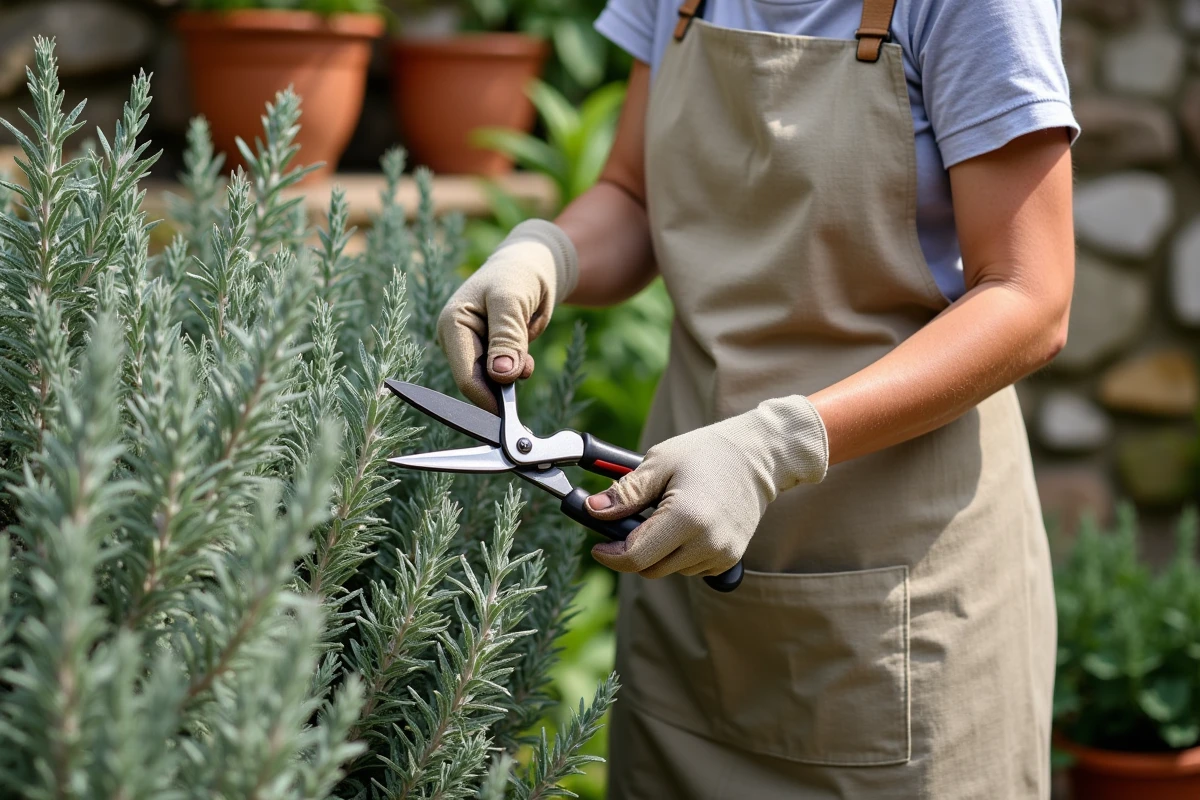
Bush sage tolerates a lot of neglect, but not just any pruning at any time. The timing of pruning directly affects the density of the foliage, the duration of flowering, and the longevity of the plant. Understanding the differences between spring pruning, summer cleaning, and autumn cutting allows for choosing the appropriate action for each situation rather than following a one-size-fits-all recipe.
Spring, summer, or autumn pruning: comparing effects on bush sage
Three pruning windows appear in horticultural guides. Their consequences on the plant vary significantly depending on the chosen timing.
| Period | Type of pruning | Effect on flowering | Main risk |
|---|---|---|---|
| March (after frost) | Severe cutting back | Stimulates abundant flowering from late spring | Late frost on young shoots |
| Summer (after the first flowering wave) | Cleaning of faded flowers, light pruning | Triggers a second wave of flowering in autumn | Low if the cut remains moderate |
| Autumn | Severe cutting back or pruning | No immediate benefit | Loss of protective leaf mass, increased sensitivity to cold |
The conclusion is clear: late winter cutting back remains the most beneficial action for the overall vigor of the plant. Summer pruning complements the work. Severe autumn pruning, on the other hand, accumulates disadvantages without providing any visible gain.
To understand when to prune bush sage, it is essential to incorporate a parameter that this table does not show: the actual hardiness of the cultivated variety.
Variety hardiness and pruning schedule: the underestimated factor
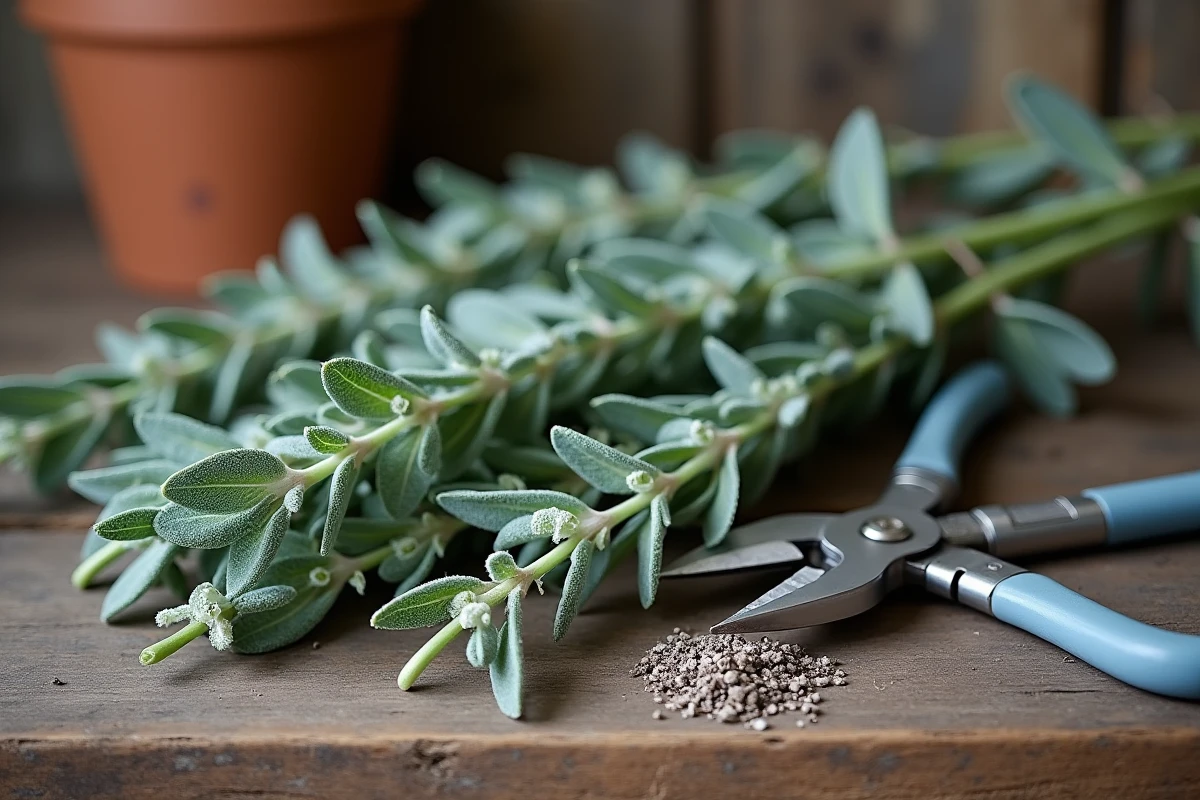
Applying the same pruning date to all bush sages ignores their differences in cold resistance. Some can withstand marked negative temperatures, while others suffer from the first light frosts.
Recent horticultural literature emphasizes a simple principle: wait for visible vegetative restart before cutting. The buds swelling on the stems indicate that the plant has survived winter. Pruning before this signal, on still inactive wood, exposes the plant to two problems.
- Cutting back too early removes the stems that protected the crown from frost. If a late cold snap occurs, the plant is left defenseless.
- On a less hardy variety, cutting on dead or semi-dead wood slows recovery because the plant expends energy to heal unnecessary wounds.
- The gardener risks confusing winter dead wood with simply dormant wood, leading to cuts that are too low and strip the base.
In practical terms, in regions with mild winters, March pruning works well. In areas where frost persists until April, it is better to postpone pruning until actual regrowth rather than adhere to a fixed schedule.
Light and regular pruning versus single severe cutting back: two strategies for flowering
Annual cutting back at the end of winter is the classic method. Stems are cut to about twenty centimeters above the ground to force the plant to regrow from the base. The result is a compact and dense bush, covered in flowers in summer.
This approach works well in temperate climates where the growing season is long. However, in areas subject to drier and longer summers, field returns show that light and regular pruning better preserves flowering than a single very short cut.
The principle of fractional pruning relies on three interventions spread throughout the year:
- A shaping cut at the end of winter, moderate (removing a third of the height rather than two-thirds).
- Cleaning of faded spikes after the first flowering wave, which frees the plant’s energy for an autumn resurgence.
- A simple removal of dry or broken stems before winter, without touching the overall volume of the bush.
The choice between these two strategies depends on the local climate and the variety. Small-leaved sages, such as Salvia microphylla, tolerate repeated light prunings better. More vigorous species accept severe cutting back without becoming sparse.
Pruning mistakes on bush sage: what causes base thinning
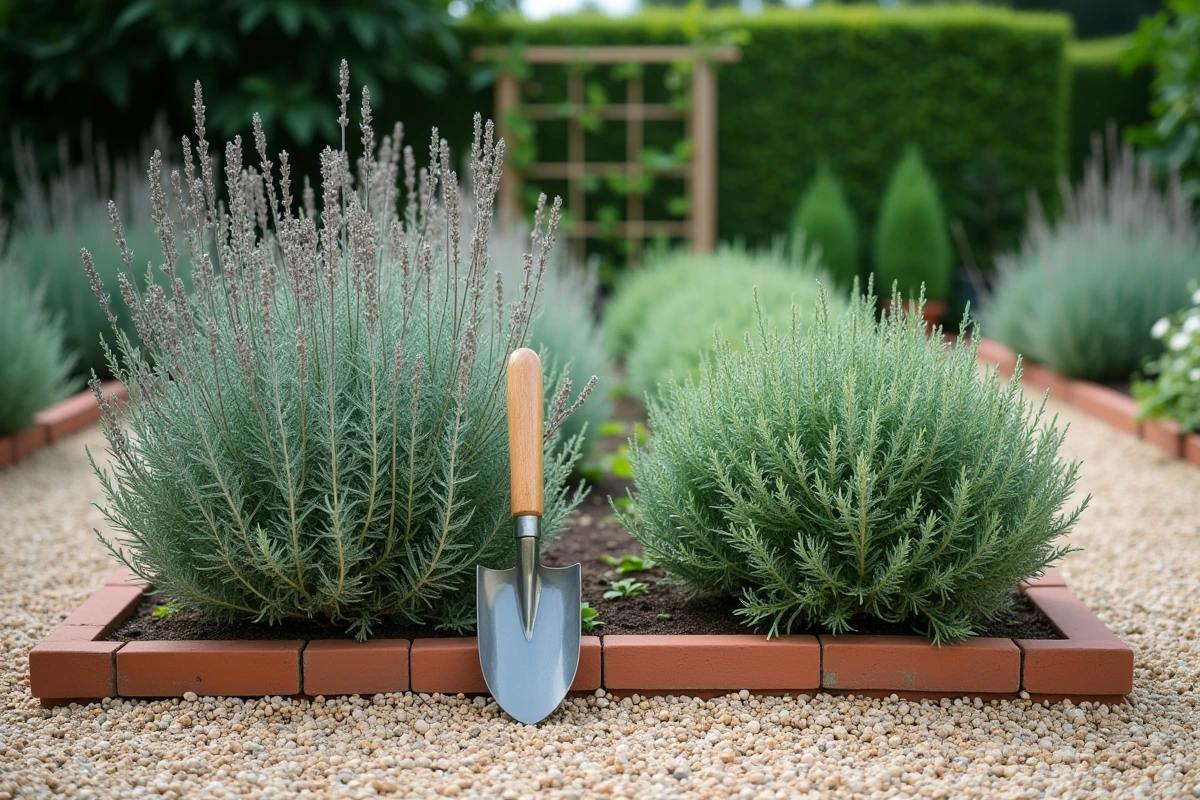
Base thinning is the most common problem with poorly pruned bush sages. The plant produces leaves and flowers only at the top of the stems, leaving a tangle of bare wood at its base.
This phenomenon has a mechanical cause: pruning only the top pushes growth upwards. The plant elongates its terminal stems without renewing its lower branches. Year after year, the silhouette opens up and droops.
To avoid this drift, the cutting back action must go low enough, down to the first visible buds on the previous year’s wood. Aeration of the center of the plant also contributes to renewal: by removing a few internal stems, light penetrates to the base and stimulates new shoots.
Another trap concerns autumn pruning. Removing the leaf mass at this time reduces the natural protection of the crown against the cold. The vegetation retained in winter acts as an insulator for the lower parts of the plant. Removing it exposes the basal buds to frost.
After pruning: soil and input to restart growth
Pruning alone is not enough. A bush sage cut back in late winter will regrow better if the soil around the base receives a light organic input (mature compost or plant mulch). The goal is to nourish the soil life without overloading the plant with nitrogen, which would favor foliage at the expense of flowers.
Moderate watering in the weeks following pruning helps recovery, especially if spring is dry. Bush sages withstand drought well once established, but the post-pruning period remains a vulnerable time when the roots must support new shoots.
Soil drainage is as important as watering. A heavy, waterlogged soil in winter causes more losses than frost itself. If sage is planted in clay soil, adding gravel or coarse sand at the base improves winter survival and spring recovery.