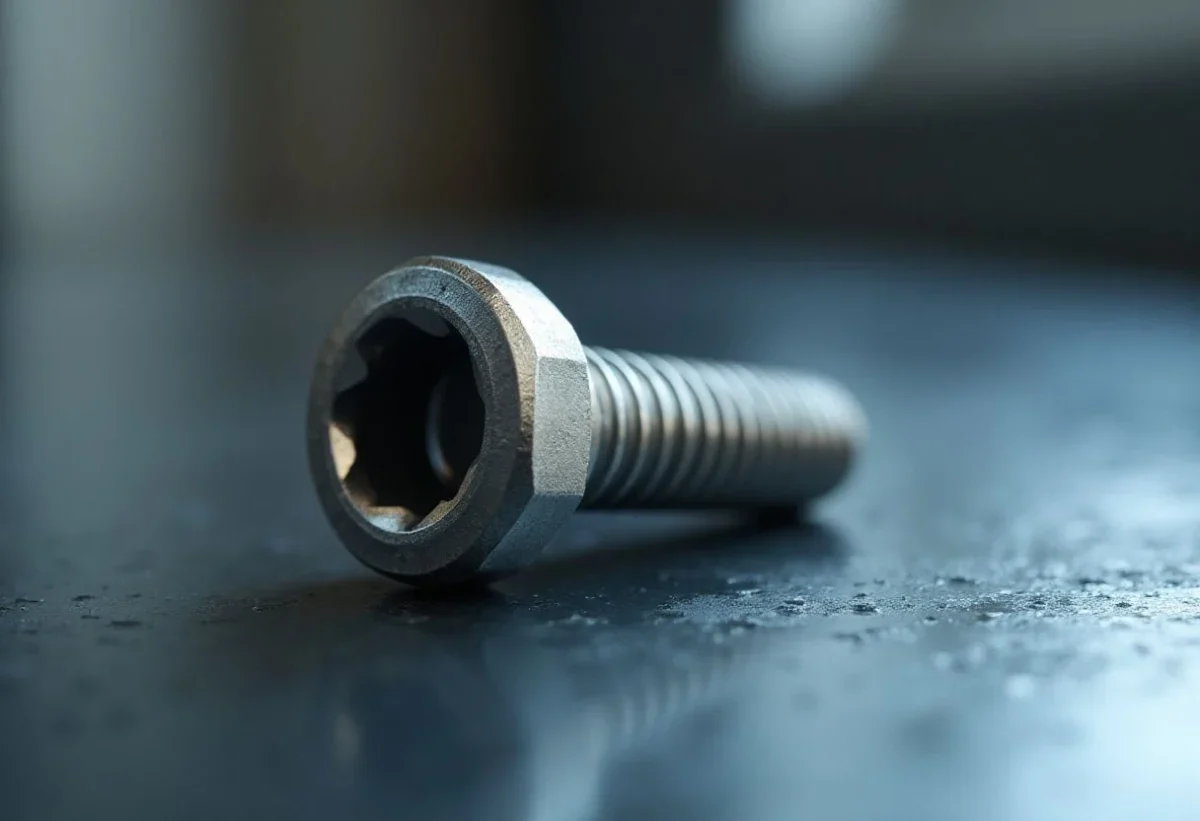
CHC screws, or hexagon socket cylindrical head screws, are essential components in the field of fastening. They are particularly valued for their strength and versatility. Whether for mechanical applications or construction, knowing when and why to choose a CHC screw is crucial.
Introduction to CHC Screws
CHC screws are often identified by their distinctive characteristics, including a cylindrical head and a hexagon socket. Commonly used in mechanical and building trades, they are appreciated for their ability to provide optimal torque while being discreet, thanks to their head that fits perfectly into the parts.
To learn more about what a CHC screw is, check out this detailed article by following this link.
Different Types of CHC Screws
CHC screws come in several variants, each suited for specific uses. For example, countersunk hexagon socket screws, ideal for a flush finish, or dome-headed hexagon socket screws, which add an aesthetic touch. The variety of sockets, ranging from BTR to hexagon sockets, meets all fastening needs.
Applications of CHC Screws
Fastening Metal Parts
In the field of mechanics, CHC screws are commonly used to assemble metal parts. Their mechanical strength and ability to withstand high torque make them ideal for robust constructions. Complex mechanical systems, such as those found in the automotive or aerospace industries, benefit from these characteristics.
Use in Mechanical Systems
CHC screws are also present in mechanical systems requiring secure and precise fastening. They are essential for assembling furniture or equipment that requires exact adjustment. Thanks to their full DIN thread and varying length diameters, they adapt to different configurations.
Advantages and Disadvantages of CHC Screws
CHC screws offer several advantages: excellent mechanical strength, discretion due to their countersunk head, and great versatility. However, they can be more expensive than other types of screws, particularly due to the materials used, such as stainless steel. The unit price may vary depending on the strength class and dimensional specifications.
Choosing the Right CHC Screw: Diameter and Length
The choice of the right CHC screw depends on several factors, including the diameter and length required for the specific application. It is crucial to select a screw that not only offers the right fit but also the necessary mechanical strength, taking into account the materials involved, whether metals or other substrates.
In summary, CHC screws provide a reliable fastening solution for many applications. Whether for precision mechanical work or assembling metal parts, their robustness and discretion make them an essential choice for professionals. For more information on CHC screws, you can visit specialized sites by following this link that offer detailed resources and online purchasing options.