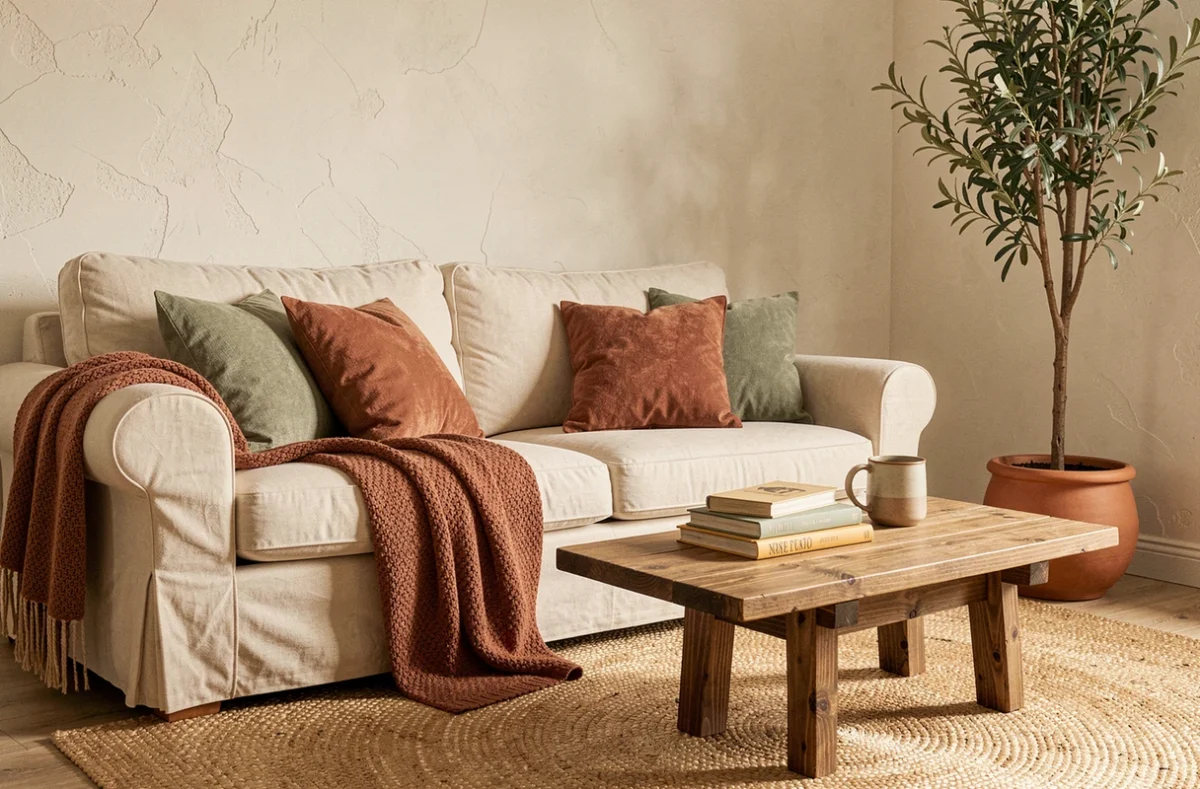
Creating a warm home is not just about piling up throws and scented candles. Even before thinking about decoration, the feeling of comfort in a room depends on measurable physical parameters: wall temperature, ventilation quality, and lighting consistency. Comparing these levers allows for prioritizing choices and avoiding unnecessary expenses.
Thermal comfort of walls: the invisible factor of a warm interior
The ADEME recommends a holistic approach combining insulation, heating, ventilation, and air quality. A cold wall or glazing can make a room uncomfortable even when the air temperature is correct. This point is rarely addressed in decoration guides, which focus on textiles and colors.
In practical terms, a sofa placed against a poorly insulated wall will always feel cold, regardless of how many cushions are placed on it. Treating cold walls before decorating radically changes the feeling in the room.
Another point to consider: after insulation work, ventilation becomes a central issue. According to Cynea Énergie, citing ADEME’s advice, a better-insulated but poorly ventilated house degrades indoor air quality. Opening windows is not always enough, especially in winter. Several resources published on the Bridge News home site detail these interactions between insulation and daily ventilation.
Color temperature of lighting: comparison table by room
Multiplying lamps is a common reflex to create ambiance. However, mixing very warm and very cool lighting in the same room creates a visual discomfort that is often hard to identify. The consistency of color temperatures matters as much as the number of light sources.
| Room | Recommended color temperature | Suitable light type |
|---|---|---|
| Living room, lounge | Warm white (around 2,700 K) | Floor lamp, table lamp, string lights |
| Kitchen (worktop) | Neutral white (around 4,000 K) | LED strip, recessed spotlight |
| Bedroom | Very warm white (below 2,700 K) | Reading lamp, bedside lamp with dimmer |
| Office, workspace | Cool neutral white (4,000 – 5,000 K) | Adjustable desk lamp |
A common mistake is to install a cool white bulb in a living room to “see better,” which immediately breaks the warmth created by the furniture and textiles. Testing the lighting on-site before buying in quantity remains the most reliable way to avoid unpleasant surprises.
Modular furniture and rounded shapes: what replaces all-textile
Publications dedicated to 2025 trends describe the development of adaptable furniture, curves, and compositions that can be adjusted for different uses of the same room. La Gazette française, in an article published in September 2026, highlights this shift: comfort increasingly relies on the modularity of furniture rather than the accumulation of textiles.
A corner sofa with movable modules, a coffee table that raises to serve as a desk, a pouf that becomes extra seating: these pieces serve multiple functions without cluttering the space. Rounded shapes, in particular, visually soften a rectangular room and facilitate movement.
Solid wood or wood-look: a choice that influences durability
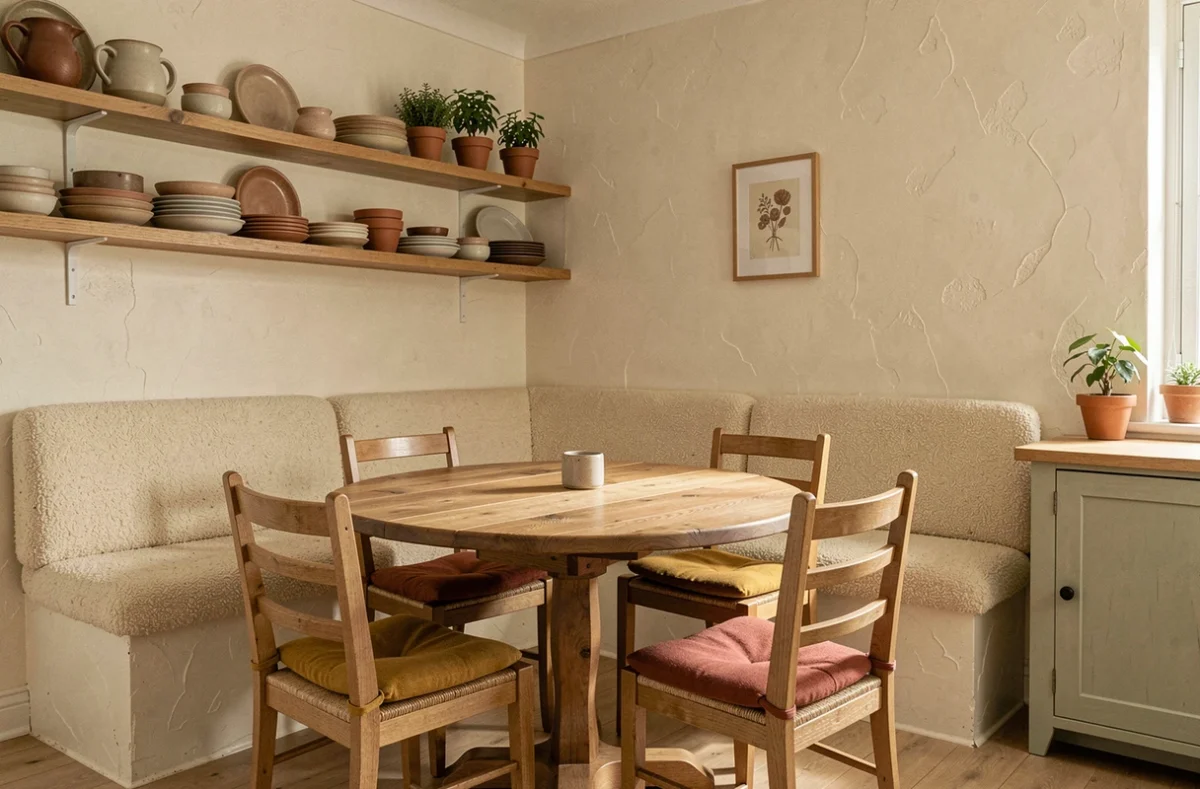
Wood remains the most cited material for adding warmth to an interior. Conversely, not all woods age the same way. A solid oak piece develops a patina, while a melamine panel that mimics wood deteriorates.
To integrate a reclaimed or reused piece, professionals recommend checking several technical criteria before being swayed by its authentic appearance:
- The structural condition of the furniture (joints, legs, hinges) must allow for daily use without immediate repair
- Compatibility with the support must be checked, especially for wall shelves fixed to lightweight partitions
- Repairability and availability of spare parts (handles, slides) determine the actual lifespan of the furniture
Choosing a reused piece based on technical criteria rather than aesthetic ones avoids disappointments after a few months of use.
Warm colors in interior decoration: dosage and limits
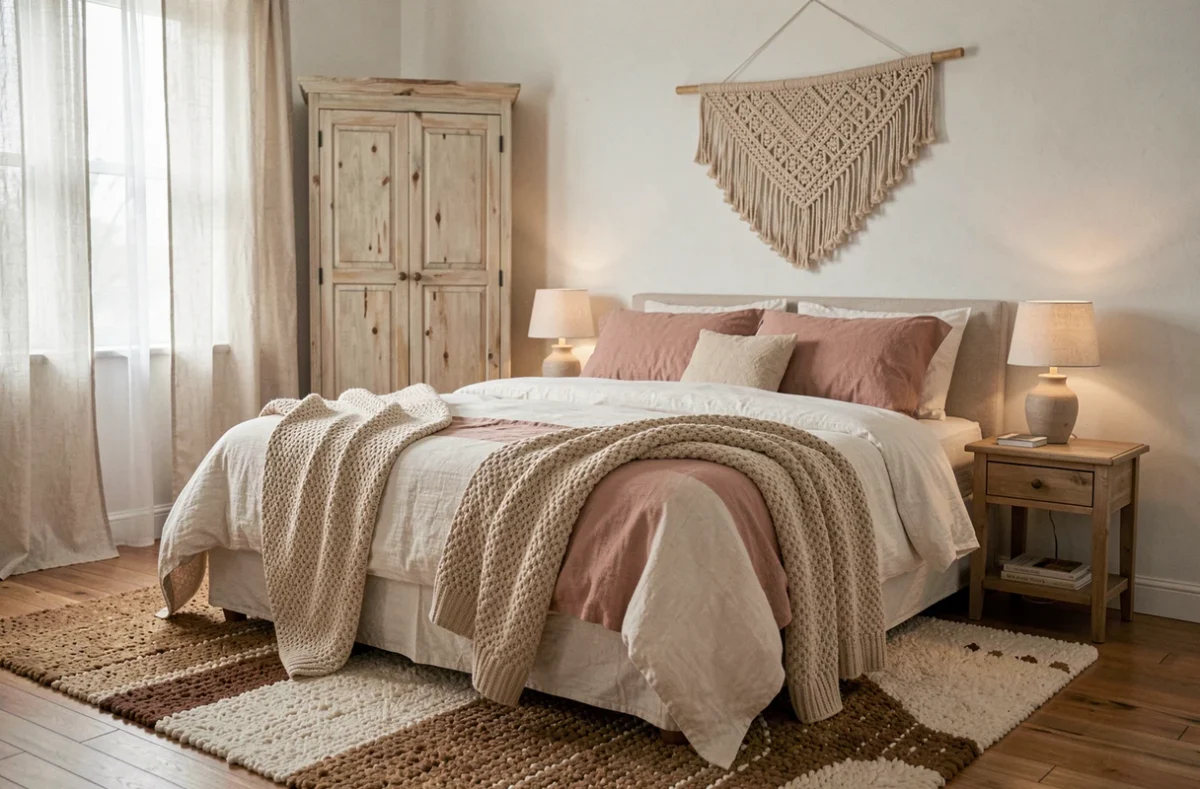
Ochre, terracotta, or rust shades regularly appear in recommendations to make a space warm. The principle works, but the dosage makes the difference. A single wall in a warm color is enough to anchor the ambiance of a living room. Painting four walls in ochre produces the opposite effect: the room appears smaller and saturated.
Neutral colors (light gray, beige, linen) serve as a background and allow decorative elements to breathe. A ratio of about one colored wall to three neutral walls offers a balance that works in most room configurations.
The mistake of the total monochrome look
Combining ochre wall, ochre sofa, ochre cushions, and ochre curtains removes all contrast. The eye has no point of reference, and the room loses depth. Introducing an element in a complementary shade (a muted blue, a sage green) revives the perception of volume.
The choice of colors is best tested directly on the wall, with a sample, rather than on a screen. Natural light in the room significantly alters the appearance of a shade, especially in north-facing spaces where the light remains cool all day.
Creating a warm interior relies on a hierarchy of decisions: first addressing actual thermal comfort, then harmonizing light sources, and only then choosing furniture and colors. Each layer amplifies the previous one but does not replace it. A cold wall remains a cold wall, even when painted in terracotta.