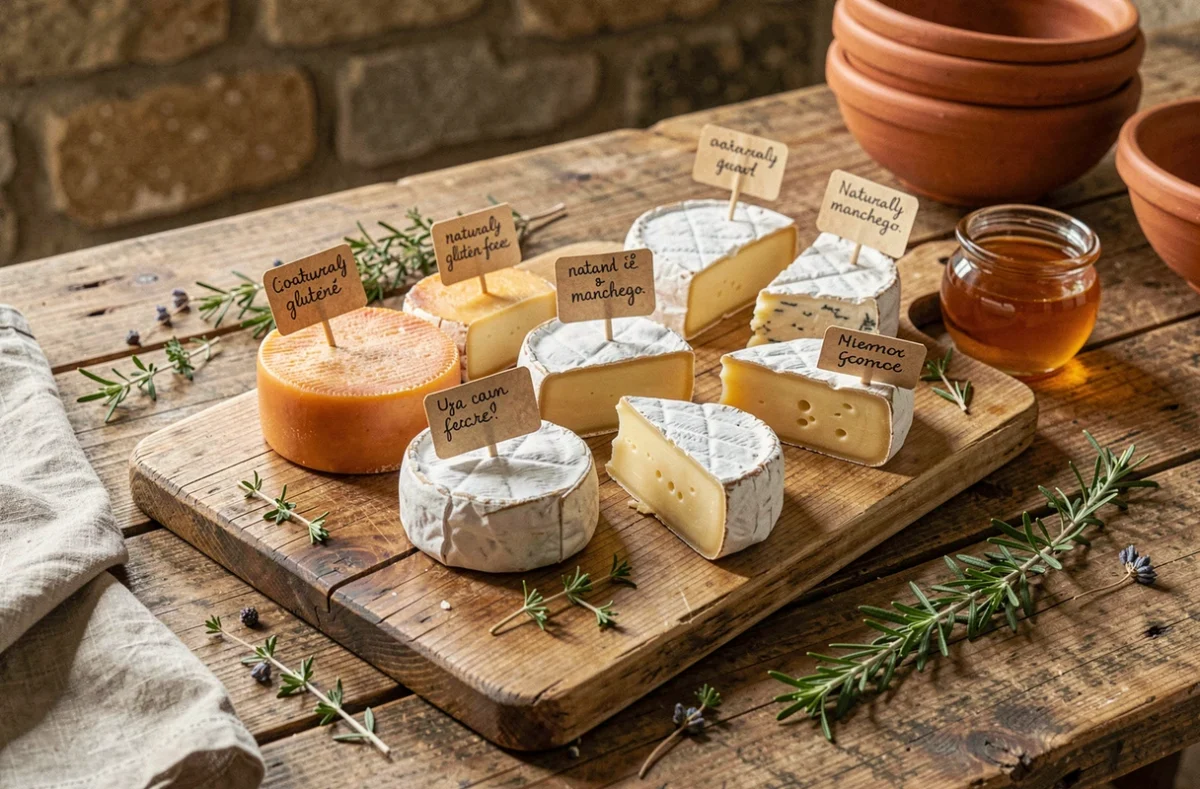
A cheese platter placed on the table, and the question arises: which of these cheeses contains gluten? Milk, the raw material for cheese, does not contain it. Traditional production methods do not either. The problem lies elsewhere, in the industrial steps that transform a simple product into a potentially hazardous food for people with celiac disease or those following a strict gluten-free diet.
Cross-contamination: the real risk of gluten-free cheeses
Competitors readily list the families of allowed cheeses. They often overlook the mechanism that makes a natural cheese problematic: cross-contamination. A properly made Comté contains no grains. However, that same Comté, sliced on a work surface shared with bread or grated with a device used for other products, can come into contact with gluten.
French regulations distinguish two situations. An allergen intentionally incorporated into the recipe (such as wheat starch in a processed cheese, for example) must be listed in the ingredients, in bold. Accidental contamination, on the other hand, falls under the control of practices in the workshop or kitchen. The mention “may contain traces of gluten” is not mandatory under the INCO regulation: a manufacturer may not indicate it even if the risk exists.
To identify gluten-free cheeses to prioritize, one must look beyond the simple ingredient list and consider the production conditions.
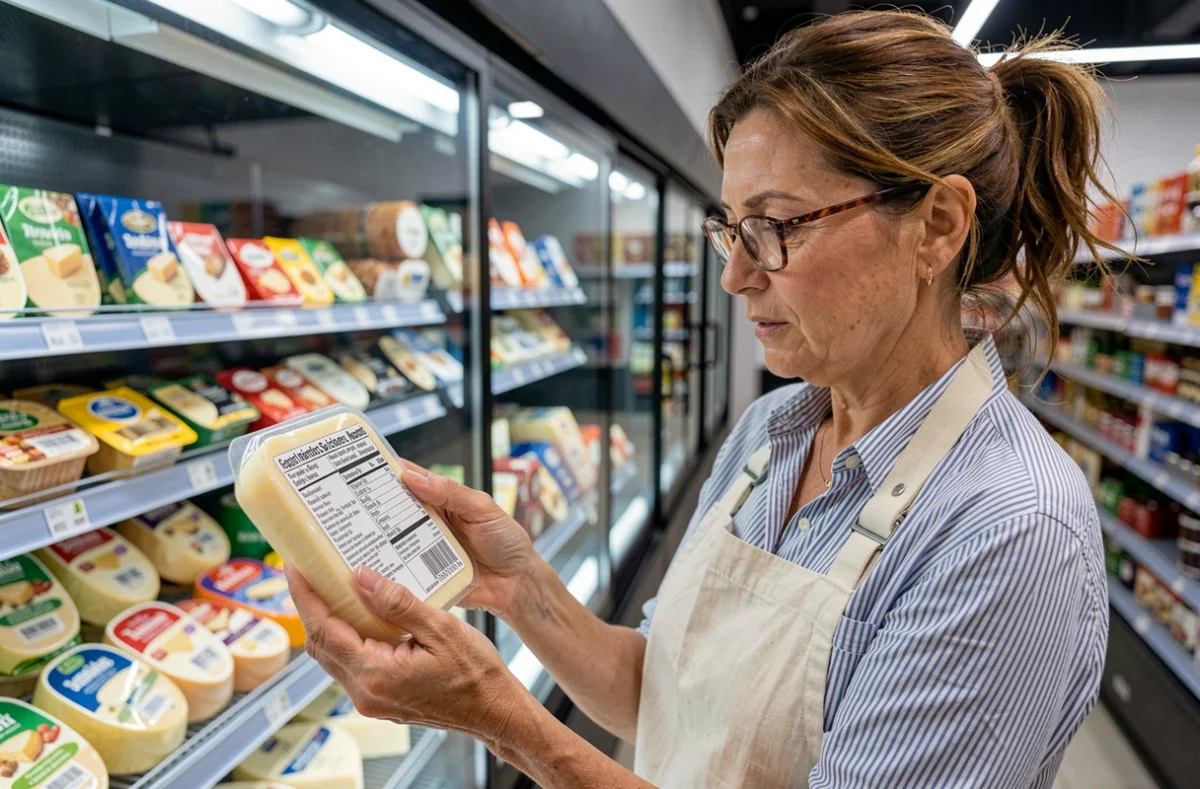
Gluten-free cheese: understanding the regulatory mention on the label
Have you ever noticed the difference between a cheese labeled “gluten-free” and a cheese that simply does not mention wheat in its ingredients? These two situations do not guarantee the same level of safety.
The claim “gluten-free” is regulated by Implementing Regulation (EU) No. 828/2014. To display it, the product must contain at most 20 mg of gluten per kilogram. This threshold has been defined as tolerable for the vast majority of people with celiac disease. A natural cheese that does not display this mention may very well be gluten-free, but no specific control certifies it.
In practice, this changes the game for three categories of products:
- Processed cheeses and cheese preparations, which sometimes incorporate wheat starch or gluten-containing flavors in their recipe.
- Industrial grated cheeses, where an anti-caking agent made from flour may be added to prevent the strands from sticking together.
- Flavored cheeses (with nuts, herbs, cumin), whose spice blends or inclusions may contain traces of grains.
A natural unprocessed cheese remains the most reliable choice. As soon as an industrial step adds an ingredient, checking the label becomes necessary.
Aged hard cheeses: a double advantage for a gluten-free diet
Comté, Parmesan, Gruyère, or Emmental share a common point rarely explained. Their long aging does not just concentrate flavors. It also degrades lactose, the milk sugar that many people with celiac disease poorly tolerate in the early weeks of their diet.
Why does this detail matter? Because celiac disease damages the villi of the small intestine, where lactase is produced. A recently diagnosed celiac often has both gluten and lactose intolerance. Long-aged hard cheeses address both issues at once: no gluten in the recipe, and virtually no lactose thanks to time.
Soft cheeses (Camembert, Brie, Coulommiers) are also naturally gluten-free as long as they remain unprocessed. Their lactose content is more variable. For someone in the intestinal recovery phase, aged hard cheeses offer the best digestive tolerance.
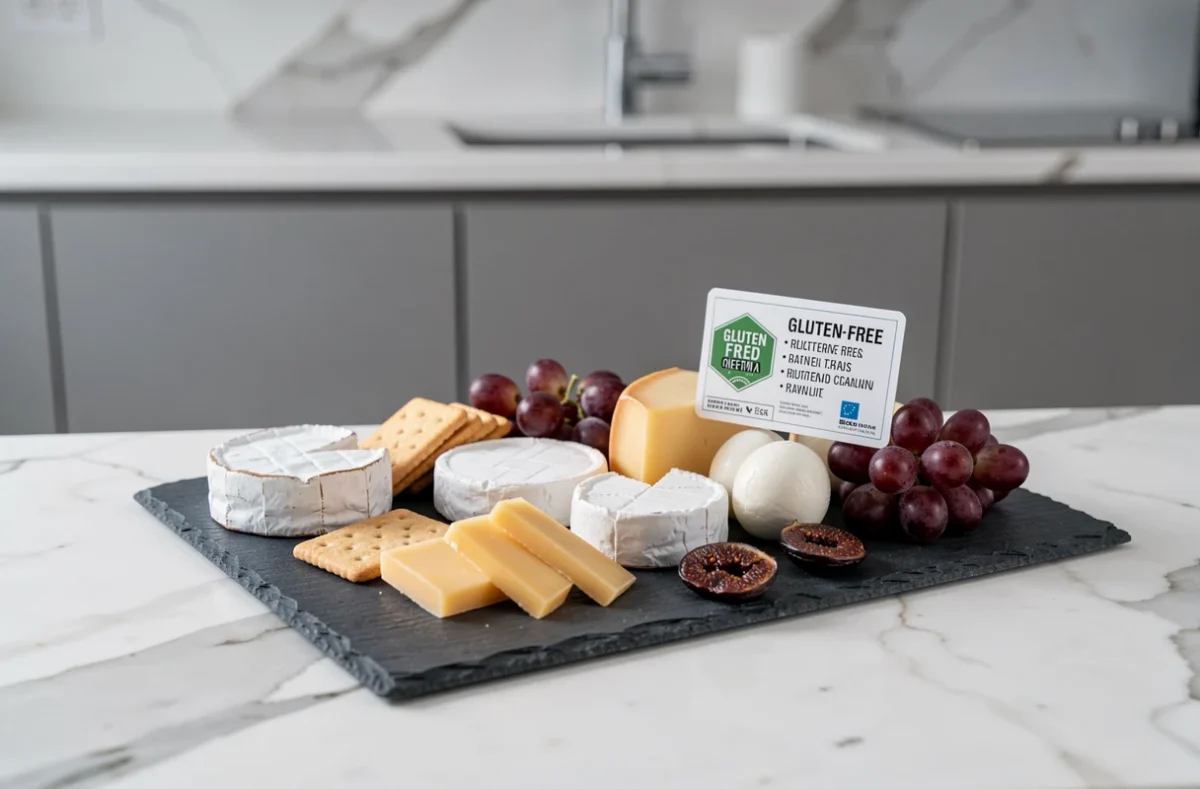
Gluten-free cheese at restaurants: questions to ask
At home, we control utensils, the work surface, and products. In restaurants, the situation becomes more complicated. Regulations require restaurateurs to inform about allergens intentionally incorporated into their dishes. A gratin, a cheese salad, or a tartine may contain a modified cheese without it being visible on the plate.
Three concrete checks can help reduce the risk:
- Ask if the cheese used is a natural cheese or a cheese preparation (melted, in cream, in sauce).
- Check that the cheese has not been grated or sliced with equipment used for bread or dough.
- Specify your dietary restriction to the server before ordering, as the mention “may contain” is not mandatory in restaurants.
A cheese platter made up of whole pieces cut to order remains the safest situation. Cooked preparations (quiches, croque-monsieur, gratins) multiply the chances of contact with wheat flour.
Choosing a gluten-free cheese: key habits to maintain
Sorting does not require becoming an expert in labeling. A few guidelines are enough to secure one’s diet without giving up the pleasure of cheese. Favoring unprocessed natural cheeses, whether cow, goat, or sheep, covers the majority of cases.
Reading the ingredient list as soon as a cheese falls outside the “natural” category allows for identifying wheat starch or a suspicious flavor. Looking for the mention “gluten-free” framed by European regulation provides an additional guarantee when it is present.
A simple cheese made with milk, salt, cultures, and rennet poses no problem. Vigilance begins where industrial processing adds ingredients. This principle applies to cheese just as it does to the rest of the aisle.