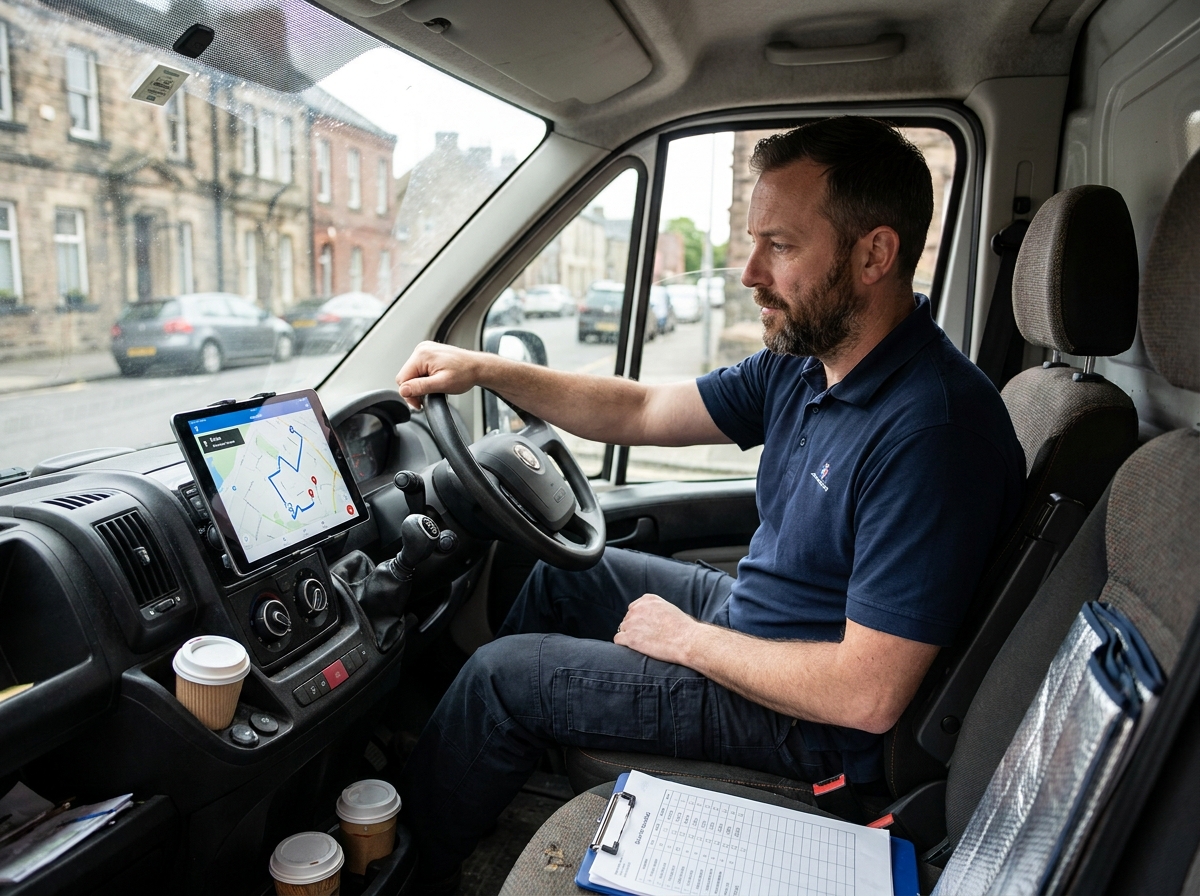
The transport of goods and last-mile delivery are among the professional activities where road risk remains the highest. Organizing delivery routes by integrating safety from the planning stage, and not just productivity, changes the game for drivers and companies alike. The recent European regulatory framework is pushing in this direction, with obligations that go beyond simple route optimization.
Smart tachograph on light commercial vehicles: what changes for routes
As of July 1, 2026, certain light commercial vehicles (LCVs) used for the transport of goods must be equipped with a second-generation smart tachograph. This obligation applies as soon as two conditions are met: the maximum authorized mass of the vehicle exceeds a certain threshold, and the transport is carried out in a commercial context governed by European regulation.
This evolution does not only concern heavy goods vehicles. It directly affects urban delivery fleets, often made up of light vehicles that were previously considered exempt. The automatic recording of driving times and positions requires a rethink of route planning in advance.
Specifically, a logistics manager scheduling a dense route over a wide time frame must now ensure that the cumulative driving times and regulatory breaks are compatible with the planned schedule. The issue of truck geolocation takes on real significance here, as real-time tracking of positions allows for the detection of exceedances before they become a risk or an infraction.
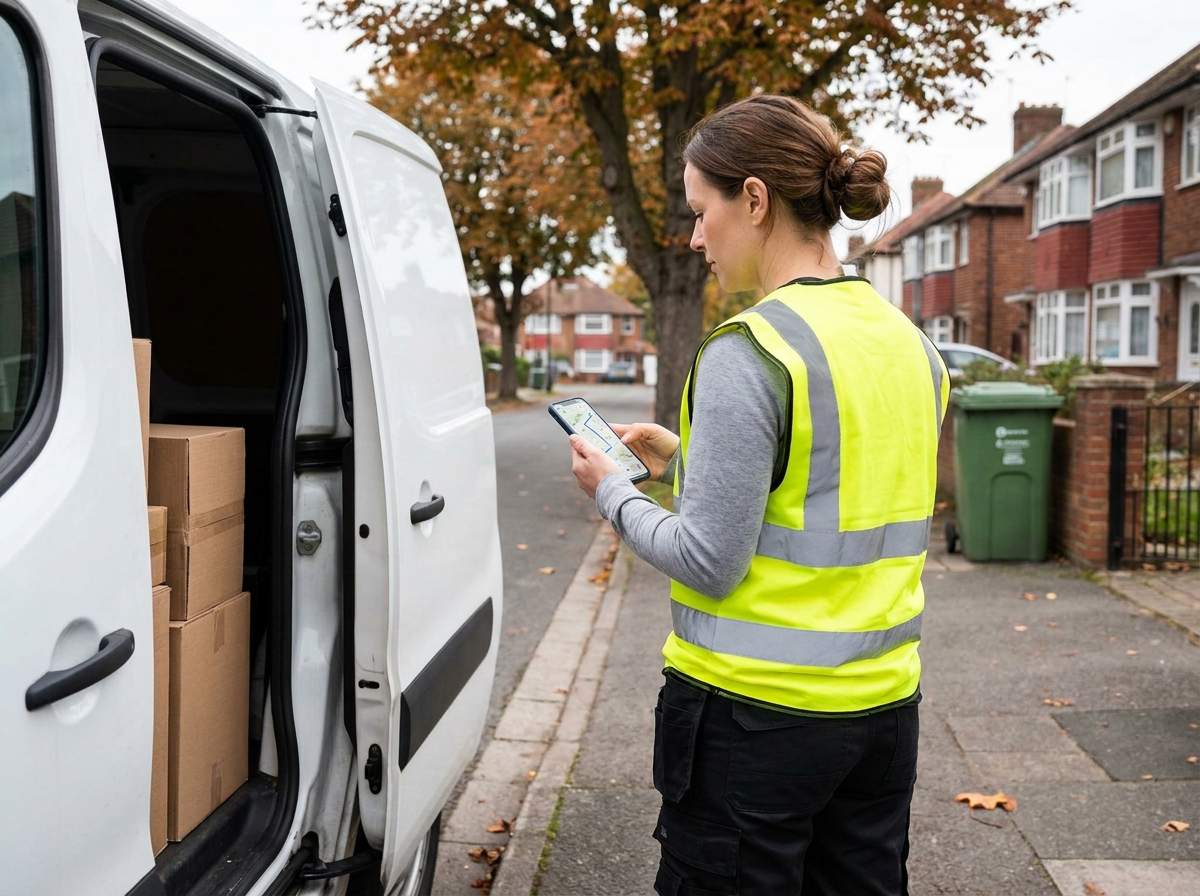
Algorithmic pressure on routes: a European framework under construction
European regulation is evolving towards a framework for working conditions related to digital platforms and automated planning tools. Several recent texts impose an assessment of risks related to the intensity of routes, the mental load on drivers, and the fatigue induced by the rhythms dictated by optimization software.
Until now, most route optimization software maximized the number of stops per vehicle and per time slot. The current regulatory direction sets a limit: route organization must incorporate realistic rest times, not just the legal minimum between two driving slots.
Field feedback on this point varies. Some companies report having already integrated these margins into their schedules, while others acknowledge that commercial pressure pushes to compress breaks. Non-compliance with existing obligations exposes companies to sanctions, but more importantly, to an increased risk of accidents related to driver fatigue.
What this framework changes in daily management
- The daily working hours of a delivery driver must be evaluated considering the mental load (navigation in dense areas, difficult parking, customer interactions), not just the raw driving time
- Companies must document the assessment of risks specific to routes, including the effects of algorithmic pressure on driving decisions
- Safety training for delivery drivers must cover risks related to rushing and shortcuts taken under time constraints, not just the highway code
Route planning and field data: beyond GPS
A route optimized for mileage is not necessarily optimized for safety. Traditional planning tools calculate the shortest or fastest route but rarely incorporate road hazard data by segment.
Some road segments account for a disproportionate share of accidents involving commercial vehicles. Delivery zones in city centers, roundabouts with high cyclist traffic, downhill stretches on departmental roads: all situations where the risk increases without the GPS indicating it.
Cross-referencing route data with local accident data remains a rare practice in the delivery sector. Data from the Health Insurance on workplace accidents is now available as open data, which opens the possibility of identifying high-risk segments for recurring routes.
Adapting the route to the loaded vehicle
A commercial vehicle loaded to full capacity does not brake like an empty vehicle. The braking distance increases, handling deteriorates in turns, and the risk of overturning poorly secured packages creates distractions while driving.
The loading order dictates the delivery order, and vice versa. Planning a route without considering the loading means forcing the driver to rummage through the vehicle at each stop, often double-parked, engine running, attention scattered.
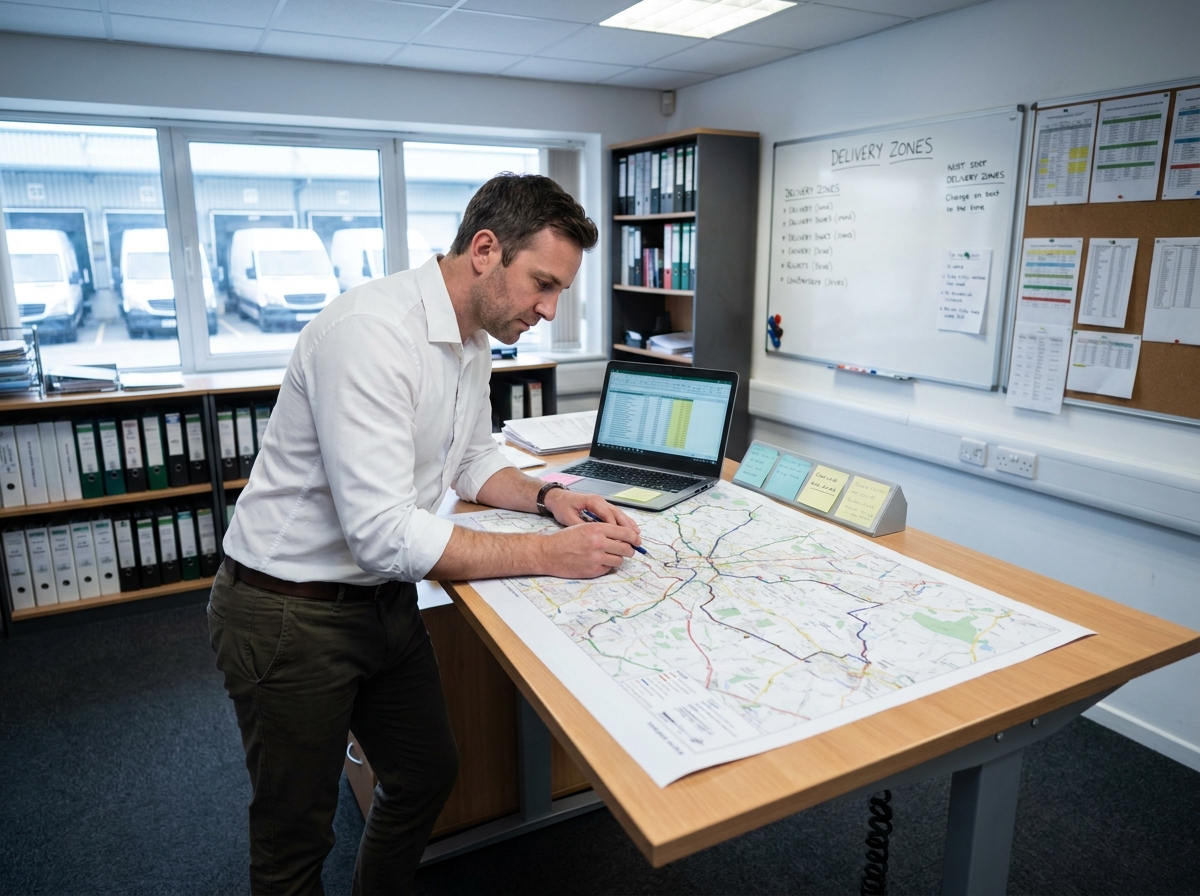
Professional road risk: the blind spots of prevention in delivery
The transport and delivery sector accounts for a significant share of serious workplace accidents in France. The available data does not always allow for distinguishing accidents that occur during a route from those that happen on the commute, complicating the precise analysis of the risk related to the routes themselves.
This statistical blur has a direct consequence: many companies underestimate the road risk specific to delivery routes. End-of-day fatigue, the accumulation of micro-decisions (parking, reversing, maneuvers in pedestrian zones), and the pressure of the last package to be delivered before the closing of the pickup point create a cocktail for accidents.
- Delivery slots concentrated between 8 AM and 10 AM and then between 5 PM and 7 PM correspond to peaks in urban traffic, mechanically increasing exposure to risk
- Delivering in thermal vehicles in low-emission zones (LEZ) adds a routing constraint that can lengthen trips and fatigue
- Independent delivery drivers, often less trained in professional road risks, represent a growing share of last-mile actors
Integrating safety into the single document
The single document for assessing professional risks (DUERP) must include road risk for any company whose employees drive as part of their work. A delivery route constitutes a mobile workplace, with risks that vary according to the time, geographical area, and load transported.
Regularly updating this document, incorporating feedback from drivers on black spots encountered during their routes, allows for adjustments in planning. A driver who systematically reports a difficulty on a given segment provides more reliable field data than an optimization algorithm.
Organizing safe delivery routes is not just about plotting routes on a map. The European regulatory framework now requires considering fatigue, mental load, and real driving conditions as integral planning parameters. Companies that integrate this upstream reduce their exposure to accidents, but also to sanctions related to non-compliance.